
Healthcare Reputation Specialists
Patients rarely stop after reading one review platform. They compare Google, NHS.uk, Doctify and sometimes Trustpilot before deciding who to trust. This guide explains which doctor rating sites actually matter, how each profile works, and how to manage them without spending hours every week.
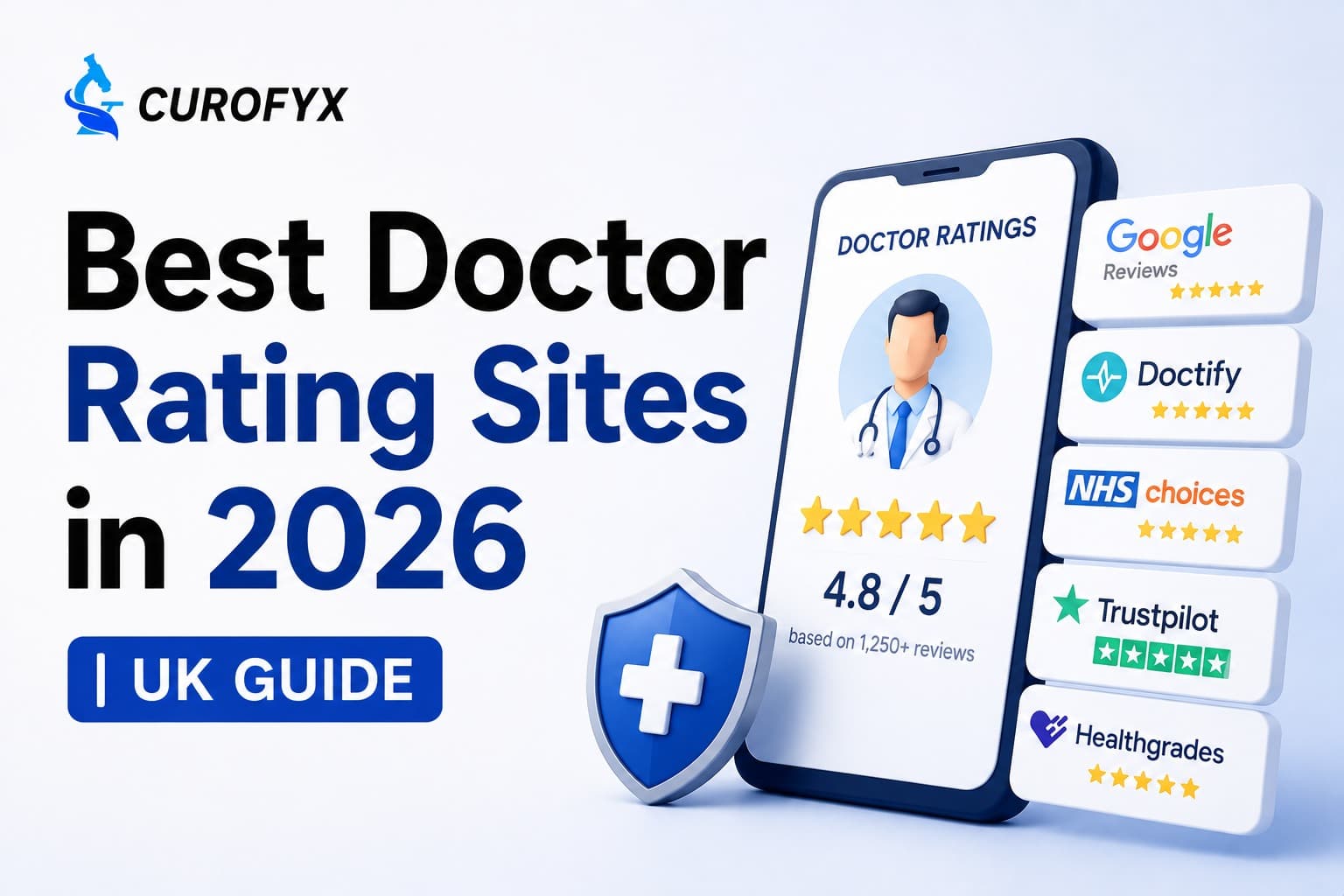
A practice manager once told me, "We've got 4.9 stars on Google, so we're covered." They weren't. A quick search showed the practice also had an outdated NHS profile, an unclaimed Doctify page, inconsistent opening hours across directories and a handful of unanswered reviews elsewhere. Nothing catastrophic. Just enough friction to make a prospective patient hesitate.
That's the reality in 2026. Patients don't consciously think, "I'm conducting reputation research." They simply open another tab. Then another. By the time they've booked an appointment, they've often seen your clinic on three or four different websites. That means your online reputation isn't built on one platform. It's built on consistency. The good news is that you don't need to dominate every review website on the internet. You only need to manage the handful that genuinely influence patient decisions.
For most UK practices, these are the platforms worth your attention.
| Platform | Best For | Priority |
|---|---|---|
| Google Business Profile | Local search visibility | Essential |
| NHS.uk | NHS GP practices and NHS services | Essential for NHS providers |
| Doctify | Private healthcare | High |
| Trustpilot | Healthcare brands with wider online presence | Medium |
| Healthgrades | Clinics targeting US patients | Only if relevant |
Everything else is usually secondary. Trying to actively manage ten different review websites is rarely a good use of your team's time.
If someone searches "dentist near me" or "private GP London," Google is almost always the first place they look. That's why Google Business Profile deserves the most attention. Unlike specialist healthcare platforms, Google influences both visibility and trust. Reviews contribute to local search prominence alongside relevance and distance, according to Google's own local ranking guidance.
Patients immediately notice:
If any of those are outdated, patients often assume the clinic itself is equally disorganised.
Claim and verify the profile. Use your official clinic name consistently. Upload professional photographs. Update holiday opening hours. Respond to every genuine review. Request reviews continuously instead of running occasional campaigns. If you're comparing specialist healthcare reputation software with Google's native tools, our comparison of Curofyx vs Google Business Profile explains where Google ends and dedicated reputation management begins.
For NHS GP surgeries and NHS-funded providers, NHS.uk remains one of the most trusted information sources available.
Patients often visit it to check:
Private-only clinics won't usually depend on NHS.uk nearly as much. GP surgeries absolutely should.
Many practices claim their Google profile but never check NHS.uk after the initial setup.
Months later:
start appearing. Patients notice those inconsistencies immediately.
Every public profile should show exactly the same:
Even small differences make patients question which information is correct.
Private healthcare has changed dramatically over the past few years. Patients increasingly expect healthcare-specific reviews rather than general business reviews. That's where Doctify fits. Instead of reviewing a restaurant or shop, patients review healthcare experiences. That context matters. Someone looking for a cosmetic dermatologist or orthopaedic consultant usually wants detailed medical experiences rather than generic "great service" comments.
Doctify makes the biggest difference for:
If most of your patients come through NHS referrals, Google and NHS.uk will probably deliver greater value. If you're almost entirely private, Doctify deserves serious attention. Our detailed comparison of Curofyx vs Doctify explains how specialist reputation management platforms differ from review marketplaces.
Most UK clinics can safely ignore Healthgrades. Some shouldn't. Practices treating international patients often discover that overseas visitors search differently. A Harley Street consultant attracting American patients, for example, may appear on Healthgrades searches even though the clinic operates entirely in London. If you actively market internationally, especially to US patients, maintaining a complete Healthgrades profile helps reinforce credibility. Otherwise, don't overcomplicate things. Focus where your patients actually search.
Trustpilot divides opinion in healthcare. Some clinics swear by it. Others ignore it completely. Both approaches can be right depending on the business model.
Trustpilot tends to perform best for healthcare organisations that operate more like consumer brands, including:
For a neighbourhood GP surgery, Google usually carries far more influence. For a national healthcare brand, Trustpilot can become an important trust signal. If you're deciding between the two approaches, our comparison of Curofyx vs Trustpilot explores where each platform fits.
Here's something I see surprisingly often. A clinic spends weeks trying to collect reviews on a platform hardly any patients use.
Meanwhile:
That's effort spent in the wrong place. I'd rather see a clinic manage three platforms exceptionally well than ten poorly. Patients reward consistency.
Reputation management shouldn't consume an entire reception team's week. With a structured process, most clinics can stay on top of reviews in under 30 minutes.
Check:
Respond where appropriate.
Confirm:
Consistency matters more than frequency.
Review:
Patterns are far more valuable than individual comments. If three patients mention confusing parking instructions, that's probably a real operational problem rather than bad luck.
Reviews aren't the whole story.
Patients also notice:
Think of every public profile as another reception desk. If that first impression feels neglected, reviews alone won't fix it.
Once practices start receiving reviews across Google, NHS.uk, Doctify and Trustpilot, manual monitoring becomes surprisingly difficult. This is where centralised reputation platforms become valuable.
Instead of logging into multiple dashboards, software such as Curofyx can help practices:
Our Multi-Platform Monitoring feature explains how clinics can simplify review management without constantly switching between websites.
These problems appear repeatedly. Not every review site deserves the same attention. Follow patient behaviour, not internet marketing advice.
Silence usually looks worse than criticism. A calm, professional response demonstrates accountability. Always avoid confirming someone is a patient unless they have already publicly disclosed it themselves. UK GDPR and patient confidentiality still apply.
Many practices suddenly start asking for reviews after receiving negative feedback. Patients notice the inconsistency. Review collection works best as an ongoing process.
An abandoned listing with outdated information can undermine an otherwise excellent reputation. Search your clinic name every few months. If a profile exists, claim it.
For most clinics, Google Business Profile remains the most influential because it affects both local search visibility and patient trust. NHS.uk is equally important for NHS providers, while private clinics should also prioritise Doctify.
Private-only clinics generally receive less value from NHS.uk than NHS-funded providers. Google and specialist healthcare platforms such as Doctify usually have greater influence for private practices.
Usually not. Google and NHS.uk carry far more weight for local GP surgeries. Trustpilot becomes more valuable for national healthcare brands, online providers and healthcare companies with significant digital services.
Weekly monitoring is sufficient for most clinics. New reviews should be acknowledged promptly, while profile information should be checked regularly to ensure addresses, phone numbers and opening hours remain accurate.
Only reviews that violate a platform's policies can usually be reported for removal. Genuine patient opinions, even critical ones, generally remain visible. A thoughtful response is often more effective than attempting removal.
Most UK clinics only need to focus on three or four key platforms. For many practices, that means Google Business Profile, NHS.uk, Doctify and, where appropriate, Trustpilot.
The strongest online reputation isn't built by chasing every new review website that appears. It's built by showing patients the same reliable, professional picture wherever they choose to look. Start with Google. Keep NHS.uk accurate if you provide NHS services. Invest in Doctify if you're a private practice. Add Trustpilot or Healthgrades only when they genuinely match your patient base.
Once those foundations are in place, make review monitoring part of your weekly routine instead of a task that only gets attention after a negative comment appears. Small, consistent actions almost always outperform occasional bursts of activity, and patients notice that consistency long before they notice your marketing.
Get a live 1-on-1 walkthrough tailored to your clinic’s workflow and see how easily you can automate review requests, monitor your reputation, and reply with AI.