

Healthcare Reputation Specialists
Many clinics obsess over the wording of their review request while overlooking the one factor that often matters more: timing. Ask too early and patients haven't processed the visit. Ask too late and they've forgotten the experience. Here's what healthcare practices should know about review request timing and why same-day automation consistently outperforms waiting until tomorrow.
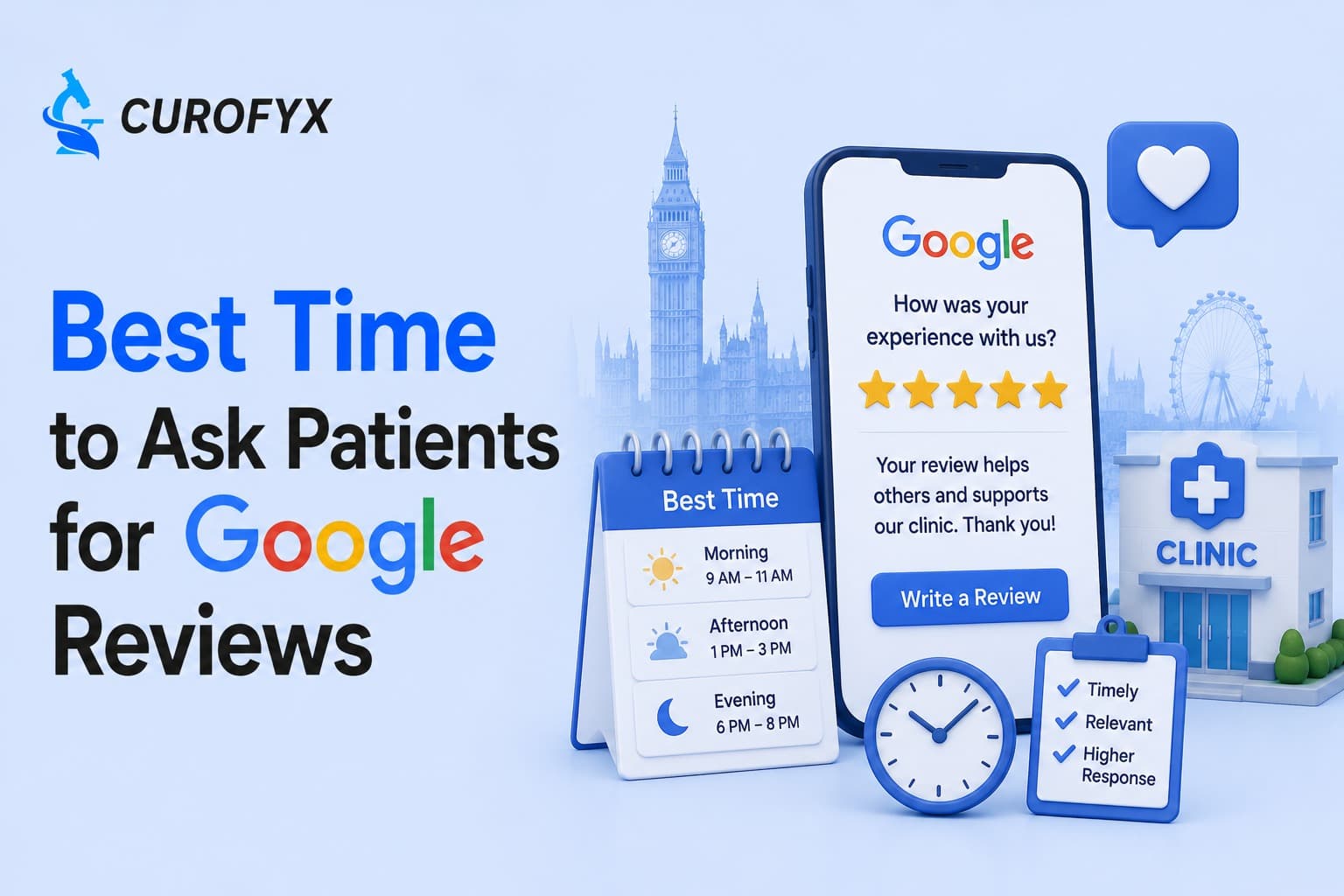
One dental practice sends review requests every Friday afternoon. Not after appointments. Not after treatments. Just every Friday. Their reasoning is simple. It saves time because reception only has to do it once a week. It's also one of the least effective ways to collect reviews.
By Friday, Monday's patients barely remember the details of their appointment. Tuesday's patients have already moved on. Some have ignored the text because they're at work. Others intended to leave a review but forgot completely.
Here's the uncomfortable truth. Most clinics don't struggle because patients refuse to leave reviews. They struggle because they ask at the wrong time. I've seen practices spend weeks rewriting SMS templates, changing email subject lines and debating whether "We'd appreciate your feedback" performs better than "Please leave us a review." Meanwhile they're sending every request two or three days after the appointment. Timing usually has a bigger impact than wording. That's why the highest-performing healthcare practices build review requests into the patient journey instead of treating them as an end-of-week administrative task.
People don't leave reviews because they suddenly remember your clinic three days later. They leave reviews because something prompts them while the experience is still fresh. Psychologists call this the recency effect. Experiences that happened recently are easier to recall, feel more vivid and require less mental effort to describe. That's exactly what you want when asking for feedback. Think about a patient leaving a physiotherapy appointment.
Two hours later they still remember:
Two days later those details begin to blur. They still remember whether they were generally happy, but they're far less likely to stop what they're doing and write about it. The emotional connection has faded. So has the motivation.
This catches many clinics by surprise. Negative experiences often stay with people for weeks. Positive experiences don't. A patient might genuinely intend to leave a glowing review after seeing their dentist. Then life happens. School pick-up. Emails. Work. Shopping. By tomorrow morning, your review request has become just another unread notification. The opportunity has passed. That's why successful practices don't rely on good intentions. They rely on good timing.
There isn't a published NHS study proving that "exactly two hours" is the perfect moment to request a review. Anyone claiming that is stretching the evidence. What we do have is a growing body of research from customer experience, healthcare reputation management and messaging platforms that points in the same direction. The pattern is remarkably consistent. Patients are significantly more likely to respond when review requests are sent while the appointment is still fresh in their minds. Industry research from reputation management platforms such as Birdeye consistently shows that businesses collecting feedback shortly after service delivery generate substantially higher response rates than those relying on delayed or manual requests. Healthcare providers see the same trend. The exact timing varies by treatment, but same-day requests almost always outperform requests sent days later.
While every clinic has a slightly different patient journey, the practical differences look something like this:
| Timing | Typical Patient Behaviour | Recommendation |
|---|---|---|
| Immediately after checkout | Patient may still be travelling or speaking with reception | Usually too early |
| 1–3 hours after appointment | Experience is fresh and patient has usually returned to normal routine | Excellent for most consultations |
| Later the same day | Still strong recall with good response potential | Very effective |
| Next day | Response rates begin to decline | Acceptable if same-day isn't possible |
| 2–3 days later | Patient engagement drops noticeably | Not recommended as default |
| Weekly or monthly batches | Experience has largely faded | Poor practice |
Notice something. The goal isn't to hit a magic number of hours. The goal is to reach patients before the memory loses its emotional relevance. For most outpatient appointments, that usually means within a few hours rather than a few days.
This is probably the biggest takeaway for practice managers. Waiting until tomorrow rarely improves review quality. It simply reduces the number of people who respond. Patients already have dozens of notifications competing for attention every day. Adding another day's delay makes your request easier to ignore.
A same-day request benefits from three advantages:
Those three factors work together. That's why reception teams who ask patients, "You'll receive a quick text later today if you'd be happy to leave us a review," often achieve stronger response rates than clinics sending unexpected messages the following afternoon. Patients know it's coming. Recognition increases action.
One important caveat. Not every healthcare service should follow exactly the same schedule. Routine appointments are different from invasive procedures. A GP consultation or dental check-up is usually suitable for a review request within a few hours. A patient recovering from sedation or surgery may appreciate more time before being asked for feedback. Good automation platforms allow clinics to customise timing based on appointment type instead of sending identical messages to every patient. That's a far better approach than forcing every review request into the same schedule.
The irony is that many clinics know they should ask for reviews sooner. They just don't have time. Reception teams are busy checking patients in, answering phones, processing referrals and dealing with last-minute appointment changes. Remembering to send review requests at exactly the right moment simply isn't realistic. That's why manual review collection almost always becomes inconsistent. Some patients receive a request. Others don't. A few get asked twice. The process depends entirely on how busy the front desk happens to be that day. Automation fixes that. Not because it's clever technology, but because it removes human memory from the equation.
The highest-performing practices don't think of review requests as a marketing campaign. They treat them as another stage of the appointment.
A typical automated workflow looks like this:
| Patient Journey | Automated Action |
|---|---|
| Appointment completed | Patient marked as attended in PMS |
| 1–3 hours later | SMS or WhatsApp review request sent automatically |
| No response after 48 hours | Optional reminder message |
| Review submitted | Request sequence stops automatically |
| Negative internal feedback (if collected) | Alert sent to practice manager for follow-up |
Notice what's missing. No spreadsheets. No reception staff trying to remember who attended yesterday. No Friday afternoon catch-up sessions. The process simply runs in the background.
Email still has a place, particularly for longer patient surveys. For review requests, though, mobile messaging generally performs better.
People read text messages quickly. WhatsApp messages are often opened within minutes. Emails compete with newsletters, appointment confirmations, invoices and everything else in an already crowded inbox. If your goal is collecting Google reviews rather than detailed patient feedback, shorter channels tend to remove friction. That's one reason many healthcare providers now use WhatsApp Review Requests instead of relying solely on email.
I've watched practices spend weeks debating message wording.
Should they say:
"We'd really appreciate your feedback."
Or:
"Would you mind leaving us a Google review?"
Honestly, that usually isn't what determines success.
A good request sent at the wrong time loses to an average request sent while the experience is still fresh. Timing.. Automation. Those three factors usually outperform endless copywriting tweaks. The wording still matters, of course. Just not as much as people think.
Collecting more reviews is useful. Collecting the right data is even more valuable.
As your review process matures, monitor metrics like:
Patterns appear surprisingly quickly. Perhaps dental hygiene appointments generate twice as many reviews as emergency visits. Maybe one branch consistently responds better to WhatsApp than SMS. Those insights help refine your timing instead of relying on assumptions.
If your organisation manages several locations, a Multi-Platform Monitoring dashboard makes it easier to compare performance across every practice from one place.
Some marketers love absolute rules.
"Always send review requests exactly two hours later."
Healthcare isn't that simple.
The right timing depends on:
Even so, one pattern remains remarkably consistent.
Waiting several days almost always reduces response rates.
Sending review requests while the experience is still fresh consistently produces better engagement.
For most GP surgeries, dental practices, physiotherapy clinics and outpatient services, that means the same day, often within a few hours of the appointment ending.
That's the window worth optimising.
For most healthcare appointments, the best time is later the same day while the experience is still fresh. A delay of around one to three hours works well for routine consultations because patients have usually left the clinic but still remember the details of their visit.
Usually not. Patients may still be at reception, travelling home or discussing follow-up care. Waiting a short period before sending an automated request often feels more natural and avoids interrupting the patient experience.
In most cases, yes. SMS and WhatsApp messages are typically opened much faster than emails, making them more effective for short actions like leaving a Google review.
No. Routine GP, dental and physiotherapy appointments can usually receive a same-day request, while patients recovering from surgery or sedation may benefit from a longer delay before being asked for feedback.
Yes. Modern reputation management platforms can automatically send review requests after completed appointments, stop reminders once a review is submitted and notify staff if internal feedback requires follow-up.
Both matter, but timing often has the greater impact. A simple request sent while the experience is still fresh generally outperforms a perfectly written message delivered several days later.
Patients rarely object to being asked for feedback. They object to being asked when the moment has already passed. If your clinic waits until the end of the week, you're relying on memory. If you automate review requests for the same day, you're capturing genuine experiences while they're still vivid. That's how review collection stops feeling like an occasional marketing task and becomes part of the patient journey.
Get a live 1-on-1 walkthrough tailored to your clinic’s workflow and see how easily you can automate review requests, monitor your reputation, and reply with AI.