

Healthcare Reputation Specialists
Patients say they've left a review, but nothing appears on your Doctify profile. Before assuming the review has disappeared, it's worth checking a few common causes. This guide explains why Doctify reviews sometimes don't show, how to fix the issue and when it's time to contact Doctify support.
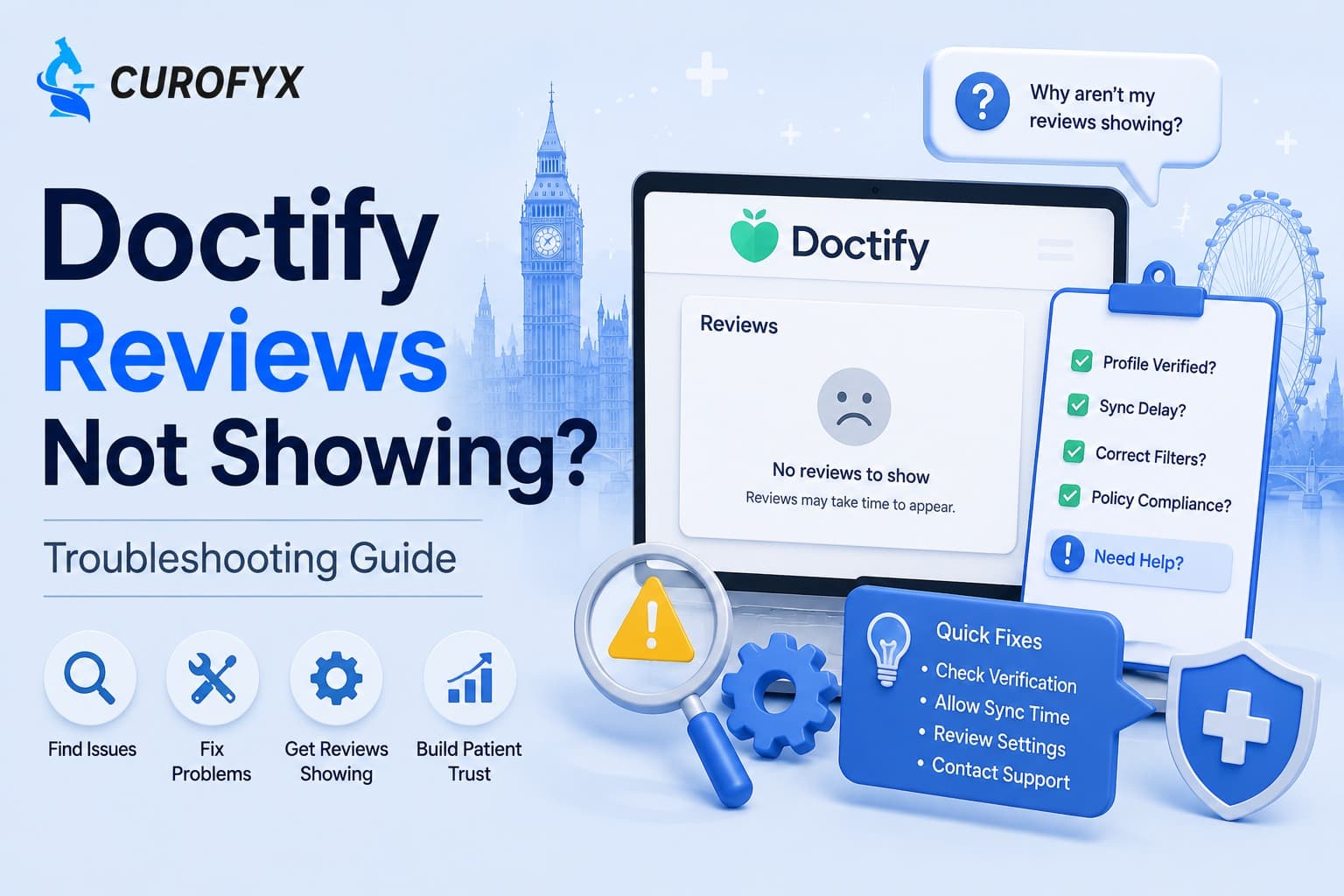
A practice manager recently told me something I hear surprisingly often. "Three patients told us they'd left excellent reviews this week. We can't see any of them." The immediate reaction was panic. Had Doctify removed them? Was there a technical problem? Had the clinic somehow lost valuable patient feedback? The answer turned out to be much less dramatic. The reviews hadn't disappeared at all. They were simply waiting to complete part of Doctify's moderation and publishing process.
That's an important distinction. Unlike platforms where reviews often appear almost immediately, Doctify places a strong emphasis on authenticity and patient trust. Reviews may pass through verification or moderation before becoming publicly visible. In many cases, the system is working exactly as intended. That doesn't mean every missing review is normal. Sometimes the problem sits with profile ownership. Sometimes it's incomplete practice information. Occasionally it's a genuine technical issue that needs support intervention. The mistake many clinics make is assuming every missing review has the same cause. It doesn't. Before contacting support, it's worth working through the most common explanations first. Most clinics discover the issue much faster that way.
The first thing to understand is that "missing" doesn't always mean "lost." Patients often complete a review and expect to see it online within minutes because that's what they're used to with other review platforms. If they don't immediately spot it on your profile, they assume something has gone wrong and may even mention it to reception. That expectation creates unnecessary concern. Doctify isn't designed to publish every submission instantly. Reviews may go through identity verification, quality checks or moderation before becoming publicly visible. During that period, neither the patient nor the clinic necessarily sees the review on the public profile.
Another surprisingly common issue is that patients review the wrong clinician or location. This happens regularly within larger healthcare organisations. Imagine a dermatology group with four consultants working from the same address. A patient believes they're reviewing the clinic but accidentally submits feedback on an individual specialist's profile instead. The practice then checks the clinic listing, finds nothing and assumes the review has disappeared.
The review exists. It's simply attached somewhere else. The same problem affects organisations operating multiple locations. Patients may search for "ABC Dental" and unknowingly leave a review for the Manchester practice instead of the Birmingham branch they actually visited. From the patient's perspective, it's one organisation. From Doctify's perspective, they're separate profiles with separate review histories.
Another factor is moderation. Healthcare reviews often contain detailed descriptions of treatment, diagnoses or personal medical information. If a review contains information requiring additional checks under Doctify's moderation policies, publication may take longer than patients expect. That delay doesn't automatically indicate a problem. It usually reflects the platform's effort to maintain reliable healthcare reviews rather than publishing everything immediately without review. One mistake I regularly see is reception teams asking patients to submit another review because the first one hasn't appeared yet. That's usually the wrong move. Duplicate submissions can create more confusion than the original delay. Before encouraging patients to write another review, confirm whether the original submission is still progressing through Doctify's normal publication process. If multiple reviews from different patients fail to appear over several days, then it's time to investigate further. One isolated review rarely indicates a system issue. A consistent pattern deserves attention.
Most clinics immediately think about software. They should think about process first. Ask yourself a few simple questions. Did the patient definitely complete the review? Were they reviewing the correct clinic profile? Was the invitation sent to the correct email address? Has enough time passed for the review to complete moderation? Has someone within your organisation recently changed ownership of the practice profile?
Those questions solve far more "missing review" cases than people expect. I've also seen situations where clinics believed reviews had vanished when, in reality, staff were checking an outdated or duplicate profile. Older healthcare practices sometimes accumulate multiple listings over several years following relocations, mergers or consultant changes. Patients continue leaving reviews across different profiles, while the clinic only monitors one of them. The result looks like disappearing feedback. In reality, it's fragmented reputation management.
This is one reason many healthcare providers choose to monitor all of their review platforms from a single dashboard instead of checking each website individually. If your practice collects reviews across Google, Doctify and other healthcare platforms, having one place to track incoming feedback makes it much easier to spot genuine issues before patients notice them. If you're already comparing review platforms, our guide to Curofyx vs Doctify can help explain how different healthcare review systems approach monitoring and visibility. At this stage, though, don't assume your reviews are gone. In most cases, they're simply waiting for the next step in the publication process or attached to a profile you weren't expecting.
One area that gets overlooked is profile verification. Many clinics assume that because their Doctify profile is live, everything behind the scenes has been fully configured. That's not always true. A profile can exist, display basic information and even appear in search results while ownership or administrative access is still incomplete. That matters because profile management becomes much harder when the correct people don't have access.
I've seen practices where the original clinic manager created the profile years ago, left the business and took the administrator access with them. The current team could view the public profile but couldn't update practice details, manage notifications or investigate review-related issues. Nothing looked broken. Until something actually went wrong. Verification issues can also arise after acquisitions, practice mergers or consultant changes. A clinic might rebrand, move premises or change ownership, yet the online profile still reflects historical information. Patients become confused, staff receive notifications inconsistently and reviews may appear attached to an outdated listing. This doesn't necessarily stop reviews from being published, but it makes identifying problems much more difficult.
Another issue involves duplicate profiles. It's more common than people realise. A consultant may have an individual profile while the clinic has its own listing. Add a second practice location and suddenly there are three or four profiles connected to the same organisation. Patients don't always know which one they should review. One patient searches for the consultant's name. Another searches for the clinic. Someone else searches by postcode.
Each path can lead to a different destination. The result is that reviews become scattered instead of building one strong reputation. If your clinic has grown over several years, it's worth auditing every public profile associated with your organisation. Search by clinic name, clinician names, old trading names and previous addresses. You'll often discover listings the current team didn't even know existed. Once you've identified the correct profile, make sure administrative access is held by current members of staff rather than a single individual. Healthcare organisations change frequently, and reputation management shouldn't depend on one person's inbox.
One of the biggest misconceptions is that every review platform works like Google. Google reviews often appear within minutes, provided they aren't caught by spam detection. Doctify follows a different approach. Healthcare reviews carry a higher level of responsibility because patients frequently discuss medical care, treatment experiences and interactions with clinicians. Platforms operating in healthcare tend to apply additional moderation and verification processes before making reviews public. That means delays aren't automatically signs of technical failure.
They're often evidence that the platform is prioritising review quality over publishing speed. The length of a delay can vary depending on several factors. A straightforward review thanking a physiotherapist for excellent care may move through the process quickly. Another review containing extensive clinical detail, references to ongoing treatment or wording that requires moderation could take longer before appearing publicly. Clinics sometimes create unnecessary work by asking patients to submit another review after only a day or two. That usually creates duplicate cases for everyone involved. Instead, allow a reasonable period before assuming something has gone wrong. If several business days pass and multiple confirmed patient reviews still haven't appeared, then it's sensible to investigate further.
Another source of confusion is notification timing. A clinic might receive confirmation that a patient has submitted feedback while the public profile hasn't yet updated. Staff naturally assume the system has failed. Often it's simply that different parts of the platform update at different stages of the publication process. Patience is useful. Blind optimism isn't. If reviews continue failing to appear over an extended period, particularly if patients confirm successful submission, then it's reasonable to move beyond waiting and begin checking profile settings or contacting support.
The key is recognising the difference between a normal moderation delay and a genuine operational issue. Clinics that understand that distinction spend less time worrying about individual reviews and more time improving the overall patient feedback process. In fact, many larger healthcare providers reduce this uncertainty by using a central monitoring platform that tracks reviews from multiple sources. Rather than checking Google, Doctify and other review sites separately throughout the day, they monitor activity from one dashboard and quickly spot when a particular platform stops updating as expected. If your practice manages feedback across several review platforms, a Multi-Platform Monitoring solution can make these patterns much easier to identify, especially for organisations with multiple clinicians or locations.
If you've worked through the common causes and your reviews still aren't appearing, it's time to look at profile ownership. This is where many clinics discover the real problem. A surprising number of Doctify profiles were created years ago by someone who no longer works for the organisation. Sometimes it was a practice manager. Sometimes it was a marketing agency. Occasionally it was an individual consultant who has since left.
The profile still exists. The clinic simply doesn't control it anymore. Without the correct administrative access, updating practice information, correcting inaccuracies or investigating review issues becomes much more difficult. The first step is confirming that you're working with the right profile. Search for your clinic name exactly as patients would. Then search variations, including older trading names, consultant names and previous addresses if the practice has relocated. Duplicate listings are more common than most healthcare providers realise, particularly for organisations that have expanded or rebranded.
Once you've identified the correct listing, check that the following information is accurate:
Incorrect information won't always prevent reviews from appearing, but it can create confusion for patients and make profile management unnecessarily complicated.
If your clinic hasn't officially claimed the profile, begin that process before making further changes. Claimed profiles allow authorised staff to manage business information, receive notifications and communicate with the platform if problems arise. For larger organisations, avoid assigning ownership to one individual. Instead, ensure access is shared with the appropriate members of the management or marketing team. Healthcare organisations change over time, and reputation management shouldn't disappear because one employee changes jobs.
Another recommendation is to carry out a profile audit every six to twelve months. It sounds excessive. It isn't. Clinics update phone numbers, relocate departments, recruit new consultants and launch additional services regularly. Online profiles should evolve alongside those operational changes. An outdated profile doesn't just frustrate patients. It can also make troubleshooting review issues much harder when they occur.
Most missing review cases are resolved without contacting support. Some aren't. If you've confirmed that patients submitted legitimate reviews, checked for duplicate profiles, verified ownership and allowed sufficient time for moderation, yet reviews still fail to appear, it's reasonable to escalate the issue. The quality of your support request matters. A vague message saying, "Our reviews aren't showing," rarely produces a quick resolution because the support team first has to gather basic information. A much stronger request includes specific details.
For example, explain that three confirmed patient reviews submitted during the previous week have not appeared on the clinic profile despite patients receiving confirmation that their submissions were completed. Include the profile URL, approximate submission dates and any reference numbers available. That gives the support team something concrete to investigate. It's also worth mentioning whether the issue affects all reviews or only certain ones. If one review appears while five others don't, that points towards a different type of investigation than a complete absence of new reviews. Avoid encouraging patients to repeatedly submit the same review while you're waiting for a response. That can create duplicate records and make the investigation more complicated for everyone involved.
Instead, let patients know that you're checking with the platform and appreciate their patience. Most patients are perfectly understanding when they know the issue is being investigated. One final point. Don't wait until something breaks before monitoring your online reputation. Clinics that actively monitor their review platforms usually notice problems within a day or two. Those that only check occasionally often discover issues weeks later, after dozens of patients have already been affected. That's one reason many healthcare organisations use a central monitoring platform rather than relying on individual staff members to check multiple review websites manually. A solution like Multi-Platform Monitoring helps practices spot unusual gaps in review activity across Google, Doctify and other review platforms before they become larger reputation problems. If you're currently evaluating healthcare reputation tools, our comparison of Curofyx vs Doctify also explains how different platforms approach review management, monitoring and reporting.
The most common reasons include moderation delays, profile verification issues, duplicate clinic profiles or patients submitting reviews to the wrong clinician or location. Most cases are resolved by checking these areas before contacting support.
There isn't a fixed timeframe. Reviews may require moderation or verification before publication, so they don't always appear immediately after submission.
It's uncommon. More often, the review is awaiting moderation, attached to a different profile or affected by a profile management issue rather than being permanently lost.
Search for your clinic's listing, identify the correct profile and follow Doctify's ownership verification process. If the profile is already managed by someone else, you'll usually need to work with Doctify support to update administrative access.
Not immediately. First confirm whether the original review is still progressing through moderation. Requesting duplicate reviews can complicate the process and create unnecessary confusion.
If multiple confirmed patient reviews remain missing after you've checked profile ownership, duplicate listings and allowed reasonable time for moderation, it's appropriate to contact support with detailed information about the issue.
A missing review doesn't automatically mean something has gone wrong. In most cases, there's a practical explanation, whether that's moderation, profile ownership, duplicate listings or a review attached to the wrong clinic. The practices that resolve these issues fastest don't panic. They follow a structured process, verify the basics and escalate only when there's clear evidence of a genuine problem. That approach saves time, reduces frustration and helps ensure patients' feedback ends up exactly where it belongs.
Get a live 1-on-1 walkthrough tailored to your clinic’s workflow and see how easily you can automate review requests, monitor your reputation, and reply with AI.