
Healthcare Reputation Specialists
Google reviews play a crucial role in helping UK healthcare clinics build trust and attract new patients. But what are clinics actually allowed to do when requesting reviews? This guide explains Google's review policies, healthcare-specific considerations, and how to collect patient feedback ethically while protecting your online reputation.
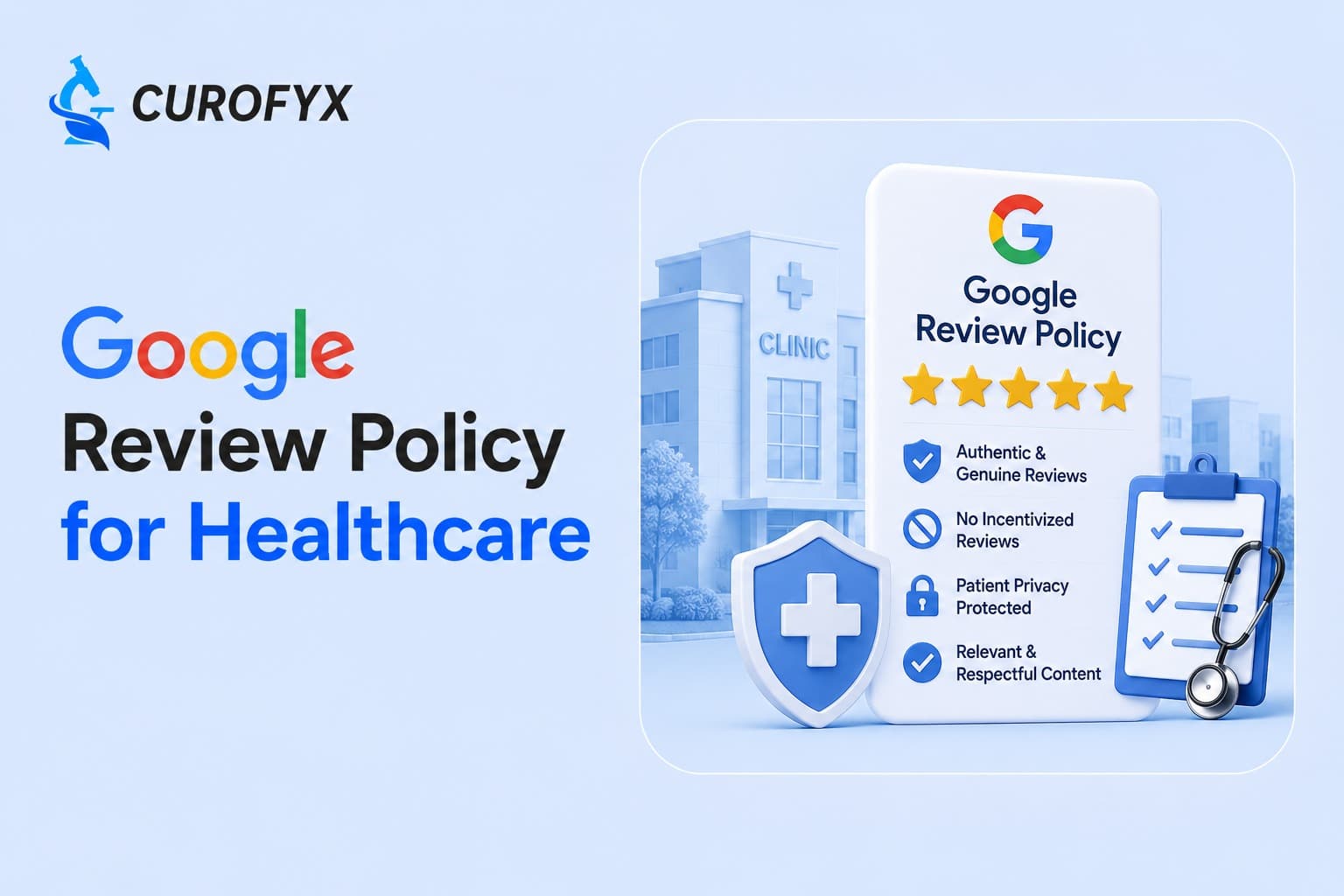
For many healthcare providers, Google reviews have become just as valuable as word-of-mouth recommendations. Patients routinely compare clinics based on ratings, recent reviews, and how practices respond to feedback before deciding where to book an appointment.
A strong collection of authentic reviews can improve patient confidence, strengthen local search visibility, and help clinics stand out in competitive healthcare markets. At the same time, Google expects businesses to collect and manage reviews fairly.
Unfortunately, there's plenty of confusion surrounding what healthcare providers can and cannot do. Is it acceptable to ask every patient for a review? Can clinics offer discounts in exchange for positive feedback? What happens if someone posts a fake review or leaves feedback about a clinic they've never visited?
Understanding Google's review policies helps clinics grow their online reputation without risking review removals or account issues. It also ensures patients receive genuine, trustworthy information when choosing healthcare providers.
In this guide, we'll explain Google's review guidelines in plain English, outline what healthcare clinics are permitted to do, highlight common policy violations, and share practical advice for collecting reviews in a compliant and ethical way.
Healthcare is built on trust, and online reviews have become one of the strongest signals patients use when evaluating a provider.
Before booking an appointment, prospective patients often compare clinics by looking at:
Unlike many purchasing decisions, choosing a healthcare provider often involves personal wellbeing, privacy, and long-term relationships. Patients naturally look for reassurance before making that choice.
Positive reviews help communicate qualities such as:
Equally important, thoughtful responses to reviews demonstrate that a clinic values patient feedback and continuously works to improve its services.
Before choosing a GP surgery... Google encourages businesses—including healthcare providers—to collect honest, unbiased reviews from real customers.
The purpose of Google Reviews is to help users make informed decisions based on genuine experiences rather than promotional content or manipulated ratings.
For clinics, this means review collection should always focus on authenticity rather than simply increasing star ratings.
One of the biggest misconceptions is that businesses should never ask for reviews.
In reality, Google explicitly allows businesses to invite customers to leave feedback.
Healthcare providers can legitimately ask patients to review their experience after:
Requesting reviews consistently is considered good practice because it helps create a balanced representation of patient experiences.
The key principle is that the request should be made fairly and without influencing what patients choose to write.
Google expects every published review to represent an authentic interaction with the business.
Reviews should come from people who have actually experienced the clinic's services.
Authentic reviews help future patients understand:
Artificially generated reviews undermine trust and violate Google's policies.
Google values fairness.
Clinics should avoid requesting reviews only from patients they believe are likely to leave positive feedback.
Instead, review requests should be incorporated into a consistent process, such as:
A consistent review strategy naturally produces a more representative picture of patient experiences.
Some clinics focus solely on increasing their average star rating.
However, many patients actually value authenticity more than perfection.
A clinic with:
often appears more trustworthy than a business with very few reviews or an unusually perfect rating.
Patients understand that no healthcare provider can satisfy every individual.
What matters is how consistently the clinic delivers quality care and responds professionally when concerns arise.
Healthcare reviews differ from reviews for restaurants, retailers, or hotels.
They often involve:
This makes it especially important for clinics to approach review management carefully.
When responding to reviews, healthcare providers should never confirm that someone is a patient or discuss confidential medical details in a public reply.
Even if a reviewer shares personal information themselves, the clinic should remain professional and protect confidentiality.
A suitable response might simply thank the reviewer for their feedback and invite them to continue the conversation privately if necessary.
When collected ethically, reviews create value for everyone.
Patients benefit because they can make better-informed healthcare decisions.
Clinics benefit because reviews:
The most successful healthcare organisations don't treat reviews as a marketing tactic alone.
They see them as an extension of patient experience and continuous quality improvement.
Rather than asking a handful of patients each month, leading clinics build review requests into their normal workflow.
Examples include:
This consistent approach helps generate a steady stream of authentic reviews while remaining fully aligned with Google's expectations.
It also reduces the temptation to use aggressive tactics that may violate review policies.
The good news is that Google actively allows businesses to ask customers for reviews.
Healthcare providers can confidently request feedback after legitimate patient interactions.
Examples include:
is entirely appropriate because it requests an honest opinion rather than encouraging a particular rating.
One of the most effective—and compliant—ways to collect reviews is through automation.
Instead of relying on reception staff to remember who to ask, clinics can automatically send review requests shortly after appointments.
Automation offers several advantages:
Consistency is far more valuable than aggressively chasing positive reviews.
A compliant review strategy treats patients equally.
Rather than deciding who is "likely" to leave a five-star review, successful clinics simply ask everyone.
This approach naturally creates:
It also provides a more balanced picture of the patient experience.
The wording of your request matters.
Good examples include:
These messages invite patients to express their genuine opinions without suggesting what those opinions should be.
While requesting reviews is encouraged, certain practices violate Google's policies and can damage your clinic's credibility.
One of the clearest policy violations is offering something valuable in exchange for a favourable review.
Examples include:
These incentives create bias because they may influence what patients write.
Even if the intention is simply to increase review numbers, Google considers this a form of review manipulation.
Some businesses use a technique called review gating.
This usually works like this:
Although it may seem like an effective way to protect ratings, selectively filtering reviewers undermines authenticity and goes against Google's expectations.
Every patient should have an equal opportunity to leave public feedback.
It might sound obvious, but clinics should never:
Google has become increasingly effective at identifying suspicious review patterns.
Fake reviews may be removed, and repeated abuse can affect the credibility of your Business Profile.
Patients should never feel obligated to leave a review.
Avoid:
Healthcare relationships rely on trust, and review requests should always remain optional.
Fortunately, there are many effective ways to grow your online reputation without crossing policy boundaries.
Successful clinics often combine several of these approaches.
The simpler the process, the more patients are likely to complete it.
Best practices include:
Removing unnecessary steps significantly improves completion rates.
Timing is often more important than frequency.
Many clinics achieve excellent results by requesting reviews:
Waiting several weeks usually leads to lower response rates because the experience is no longer fresh.
Patients are often more willing to leave reviews when they understand the purpose.
You might explain that reviews help:
Framing reviews as a way to help others feels more authentic than focusing solely on ratings.
Some clinics are tempted by shortcuts because they want faster reputation growth.
In reality, ethical review collection almost always delivers better long-term results.
Authentic reviews are:
A clinic that consistently collects honest feedback over several years will usually build a stronger reputation than one attempting to artificially inflate its ratings.
Modern healthcare reputation management platforms help clinics remain compliant by automating review requests without influencing patient responses.
Instead of manually deciding who receives a review invitation, software can:
By removing manual bias from the process, automation supports both compliance and consistency.
This is especially valuable for multi-branch healthcare groups, where maintaining consistent review policies and monitoring feedback across multiple locations can otherwise become time-consuming.
Google's review system is designed to help users make informed decisions based on authentic experiences. To maintain trust, Google may remove reviews—or take action against business profiles—when its review policies are violated.
For healthcare clinics, understanding these rules is essential. A compliant review strategy protects your reputation, while policy violations can undermine years of hard-earned trust.
Below are some of the most common reasons reviews are removed or flagged.
Google expects every review to reflect a genuine customer experience.
Reviews may be removed if they are:
Authenticity is one of Google's core review principles. Clinics should focus on collecting real patient feedback rather than trying to inflate ratings artificially.
Offering rewards in exchange for reviews can violate Google's policies, especially if the incentive encourages positive feedback.
Examples include:
Even if the intention is simply to encourage participation, incentives can influence review content and reduce trust in the platform.
Google may also remove reviews that appear to be:
Steady, organic review growth is far healthier than sudden spikes that appear unnatural.
Reviews should relate to a genuine patient experience.
Google may remove reviews containing:
While negative reviews are allowed, they should remain relevant to the patient's experience with the clinic.
Yes. Google allows businesses, including healthcare providers, to request honest reviews from genuine patients, provided they do not pressure patients or attempt to influence review content.
No. Offering rewards, discounts, vouchers, or other incentives in exchange for reviews can violate Google's review policies because it may influence the feedback patients provide.
Review gating is the practice of filtering patients before inviting them to leave a public review, typically directing only satisfied patients to Google. This approach is discouraged because it creates a biased review profile.
Yes. Reviews that violate Google's policies—such as fake, spam, or abusive reviews—can be reported for review. Google will assess whether the content breaches its guidelines before deciding whether to remove it.
Where practical, yes. Responding to both positive and negative reviews demonstrates professionalism, shows that patient feedback is valued, and helps build trust with prospective patients.
The safest approach is to automatically invite every patient to leave honest feedback after their appointment using neutral language, without offering incentives or filtering reviewers.
Google reviews are one of the most influential trust signals for modern healthcare providers. Patients rely on them to compare clinics, evaluate service quality, and decide where to book appointments.
The good news is that Google's policies are straightforward when viewed through one guiding principle: reviews should be genuine, unbiased, and based on real patient experiences.
For clinics, this means requesting feedback consistently, avoiding incentives, treating every patient equally, and responding professionally to both praise and criticism. Ethical review collection not only keeps your clinic aligned with Google's guidelines but also builds lasting credibility with prospective patients.
Healthcare-focused platforms like Curofyx simplify this process by automating compliant review requests, monitoring feedback across Google, NHS, Doctify, Trustpilot, and other healthcare review platforms, and helping teams respond quickly with AI-assisted replies. By making review management part of your everyday patient experience, your clinic can strengthen trust, improve local visibility, and build a reputation that grows naturally over time.
Get a live 1-on-1 walkthrough tailored to your clinic’s workflow and see how easily you can automate review requests, monitor your reputation, and reply with AI.