
Healthcare Reputation Specialists
A fake Google review can damage patient trust long before Google decides whether to remove it. This article explains how to identify fraudulent reviews, report them effectively, when UK defamation law becomes relevant, and how to respond publicly without making the situation worse.
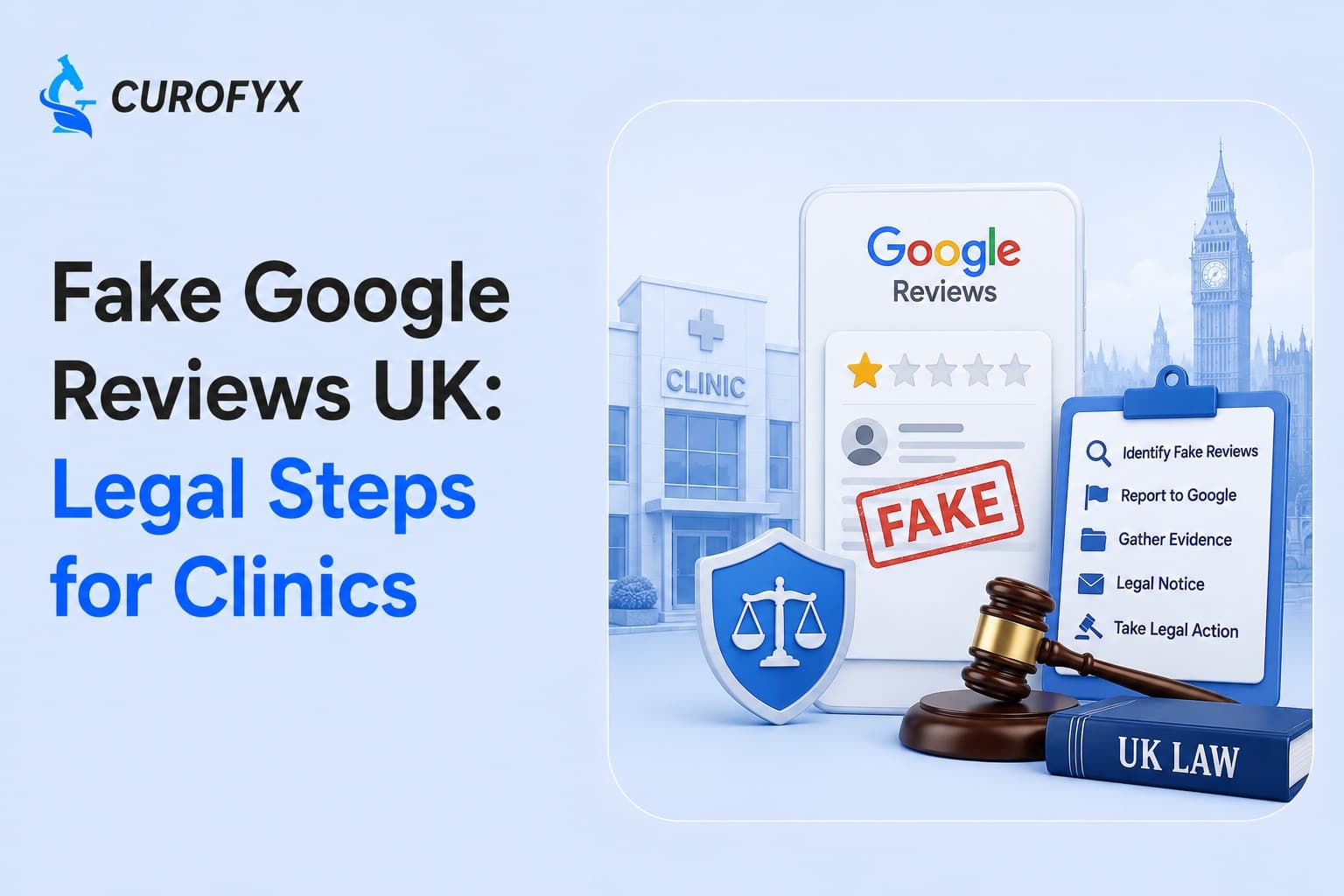
A one-star review from someone who was never your patient can undo months of reputation building.
That's the frustrating part. Google doesn't ask every reviewer to prove they visited your clinic before publishing their comments. That means GP surgeries, dental practices, private clinics and aesthetic providers occasionally find themselves dealing with reviews that are completely fabricated.
The instinctive reaction is usually the wrong one. Some clinics threaten legal action in the reply. Others argue with the reviewer. A surprising number simply ignore the review and hope it disappears.
None of those approaches tends to work.The better approach is to treat fake reviews like a documented compliance issue. Collect evidence, follow Google's dispute process properly, respond professionally in public, and only escalate legally if the facts genuinely justify it.
Here's how experienced practice managers usually handle it.
Not every negative review is fake.
That distinction matters because clinics sometimes spend weeks trying to remove genuine patient criticism instead of fixing the underlying issue.
Before reporting a review, ask a simple question:
If the answer is yes, the review is probably legitimate, even if parts of it are exaggerated.
If nobody at the practice can identify the individual after checking appointment records, clinician schedules, payment history and communication logs, you may be dealing with a fake review.
Some common warning signs include:
None of these automatically proves fraud.
Together, however, they create a stronger case when reporting the review to Google.
Healthcare is personal.
Many patients deliberately use initials or anonymous Google accounts to protect their privacy.
Removing anonymity from your checklist avoids accidentally reporting genuine patients who simply don't want their medical history connected to their public Google profile.
Focus on whether the events described could realistically have happened.
Many practice owners immediately reply with something like:
"We have no record of you attending our clinic. Please remove this review immediately."
It sounds reasonable.
Unfortunately, it often isn't. If the reviewer genuinely was a patient using another family member's Google account, you've just publicly suggested they never visited. If the review later proves genuine, you've created a second problem.
A better response acknowledges the concern while inviting private verification. Keep your evidence for Google. Keep your public response calm.
Google removes reviews that breach its content policies, not simply because a business disagrees with them.
A review is more likely to be removed if it involves:
Locate the review inside your Google Business Profile and select the option to report it. Choose the reason that best matches Google's policy. Avoid selecting random categories. Submitting the wrong reason can slow the review process.
Google rarely accepts emotional arguments. Instead, prepare evidence such as:
| Evidence | Why It Helps |
|---|---|
| Appointment records | Shows no matching patient exists |
| Staff rotas | Demonstrates the named clinician wasn't working |
| Treatment logs | Confirms the described procedure never happened |
| CCTV reception records where appropriate | Helps verify attendance if legally retained |
| Email correspondence | Supports your timeline |
| Internal investigation notes | Demonstrates reasonable verification |
The stronger your evidence, the easier it becomes if further escalation is needed.
Google may remove the review quickly. It may also decide to leave it online. That doesn't necessarily mean Google believes the review. It often means there wasn't enough evidence under Google's own moderation rules.
This is where many clinics panic.
Don't.
If your practice is looking to automate ethical review requests across multiple platforms, Curofyx offers dedicated solutions for GP surgeries, dental practices and private clinics.
Legal action should be the exception. Not the default. Most fake reviews are resolved through Google or become less significant as genuine patient feedback grows. However, some situations justify speaking to a solicitor.
Examples include:
Under UK law, a statement may be defamatory if it seriously harms the reputation of an individual or business.
That doesn't mean every harsh opinion qualifies.
A patient saying,
"I wouldn't return."
is generally opinion.
A reviewer falsely claiming,
"This clinic forged my medical records."
is a factual allegation.
The difference matters.
Solicitors will usually assess:
Healthcare providers should seek specialist legal advice before issuing threats or formal notices.
Thank you for your feedback. We take patient concerns seriously but have been unable to identify any visit matching the information provided. We would welcome the opportunity to investigate further if you contact the practice directly with your appointment details.
Patient safety and transparency are extremely important to us. We have been unable to verify the circumstances described in this review and have asked Google to investigate. If you have attended our clinic, please contact our practice manager so we can review your concerns properly.
We cannot comment publicly on individual clinical matters because of patient confidentiality. Based on our internal review, we have been unable to verify the events described. We remain available to discuss any genuine concerns privately.
These responses achieve three things. They reassure prospective patients. They protect confidentiality. They avoid escalating the dispute.
Here's something many reputation agencies don't mention. The best defence against fake reviews isn't becoming better at reporting them. It's collecting enough authentic reviews that fake ones become statistical noise.
Imagine two clinics.
Clinic A has twelve reviews.
Clinic B has 420.
One fake one-star review damages Clinic A far more than Clinic B. Volume matters. Consistency matters even more. Automated review requests sent shortly after appointments generally outperform reception staff verbally asking patients to "leave us a review sometime."
Campaigns stop. Processes continue.
A good review system includes:
If you're comparing platforms for managing Google reviews alongside healthcare-specific review sites, these comparisons may help:
Prospective patients often read your replies before they read the review itself. That's because they're looking for reassurance. An angry owner arguing with strangers online raises questions. A measured response signals professionalism.
Even if Google never removes the review, your response can reduce the damage considerably. Patients understand that fake reviews exist. They expect mature businesses to handle them calmly.
Skipping straight to step eight rarely produces the best outcome.
Yes. If Google concludes the review breaches its policies, particularly fake engagement or misleading content, it may remove it. Supplying clear supporting evidence improves your chances.
There is no guaranteed timeframe. Some reviews are assessed within days, while others can take several weeks depending on the complexity of the case.
Sometimes, but legal action is generally reserved for serious cases involving defamatory statements or significant reputational harm. Most disputes should begin with Google's own reporting process.
Yes. A calm, professional response reassures prospective patients while the review is under investigation. Avoid discussing confidential clinical information.
Usually not if your practice already has a healthy number of genuine reviews. Smaller clinics with very few reviews are typically affected more than established practices with consistent patient feedback.
No. Google doesn't remove reviews because they're negative. The review generally needs to breach Google's content policies or contain unlawful content before removal becomes likely.
A fake review feels personal because healthcare is personal. But reacting emotionally rarely protects your reputation.
The clinics that recover fastest follow a clear process. Verify the facts, report the review properly, respond with professionalism and keep generating authentic patient feedback. If the review crosses into serious false allegations that harm your reputation, that's the point where legal advice becomes worthwhile.
A strong reputation isn't built by removing every negative review. It's built by making sure genuine patient experiences outweigh the occasional fake one.
Get a live 1-on-1 walkthrough tailored to your clinic’s workflow and see how easily you can automate review requests, monitor your reputation, and reply with AI.