
Healthcare Reputation Specialists
A chiropractic practice can do excellent clinical work and still lose new patients because its online reputation tells a different story. This guide explains how to build credible reviews, respond to difficult feedback, protect patient privacy and choose the platforms that matter most for chiropractic clinics in the UK.
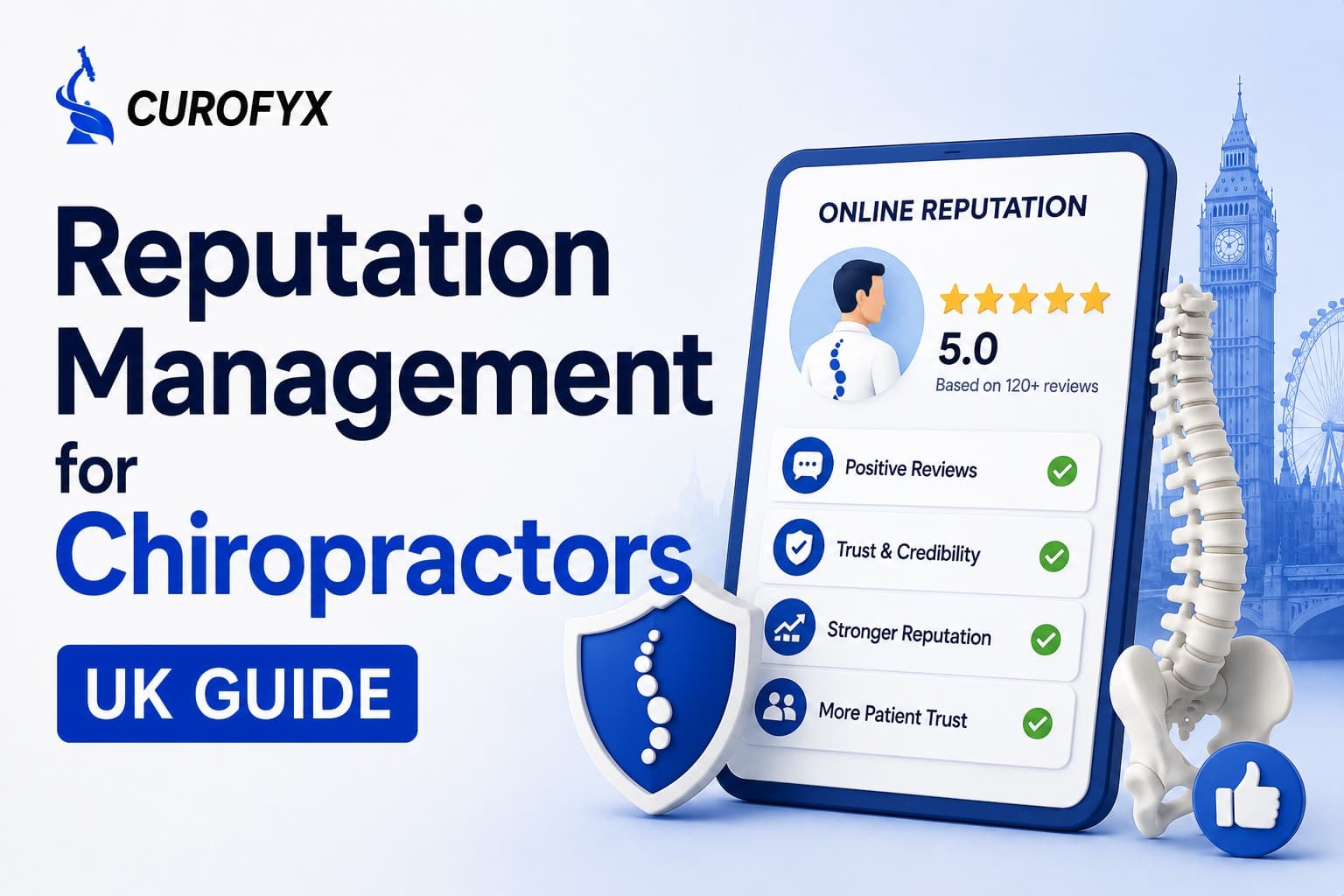
A prospective chiropractic patient is rarely starting with complete certainty. They may have back pain, neck discomfort, a previous poor experience with treatment, or simply no idea what their first appointment will involve. Before booking, they often look for reassurance. That is where reputation management for chiropractors becomes more than a marketing exercise. A Google profile with recent reviews, thoughtful responses and accurate practice information gives people something concrete to assess. A profile with a handful of old reviews, unanswered complaints and vague treatment claims creates a different impression, even if the clinic itself is excellent.
There is a particular challenge with chiropractic care. Patients are not reviewing a product with an obvious pass or fail outcome. Their experience can involve expectations about pain, mobility, communication, appointment length, treatment plans and progress. Two patients can receive appropriate care and walk away with very different opinions. That makes the quality of your review management matter. It also means a chiropractor should never try to manufacture a perfect-looking reputation. The better objective is a credible one.
The General Chiropractic Council's current Code of Professional Practice came into effect on 1 January 2026, and chiropractors in the UK must be registered with the GCC. The regulator also makes clear that public-facing information and advertising must be accurate and not misleading. For clinics, that creates an important distinction: reputation management should help patients understand the practice, not persuade them through exaggerated clinical promises. If your practice needs a more structured approach to managing its online presence, see Curofyx's chiropractic clinic reputation management solution.
A review saying "the receptionist was lovely and the appointment was on time" is useful. But it tells a prospective chiropractic patient only part of the story. People considering chiropractic care often want to understand what the experience actually feels like. Was the practitioner easy to talk to? Did they explain the examination? Were treatment options discussed clearly? Did the patient feel listened to? Did the clinic explain what would happen next? Those details can carry more weight than a generic five-star comment. There is another complication. Patients may describe their symptoms or treatment in their reviews. That creates a privacy problem for the clinic responding publicly.
Suppose someone writes:
"I came in with severe lower back pain after a lifting injury. After three sessions I..."
The clinic may know exactly who wrote the review. It may also know the patient's diagnosis, treatment history and outcome. That does not mean the clinic can confirm any of it publicly. Health information is special category data under the UK GDPR. The ICO specifically includes information concerning a person's health within that category, which means organisations need to apply additional safeguards when processing it. So the public response should stay general.
A safe response might acknowledge the feedback and invite the person to contact the practice privately. It should not say, "We're sorry your disc injury did not respond to the treatment we provided," even if that statement is factually correct. That distinction is easy to miss. The review belongs to the patient. The clinical record belongs in the appropriate confidential system. Your public response is neither the place to disclose the record nor the place to prove that the patient is wrong.
Good reputation management starts before anyone leaves a review. A prospective patient is already forming an opinion when they see your website, Google Business Profile, practitioner biographies, photographs, opening hours and treatment information. For chiropractors, accuracy matters particularly strongly because the profession is regulated. The GCC says all chiropractors in the UK must be registered, and it provides an "I'm Registered" mark for registered professionals to use publicly. Your online presence should therefore answer straightforward questions without making patients work for the information. Who works at the clinic? What are their qualifications? Where is the practice? What does the first appointment involve? How can someone contact you? What should a patient expect before treatment? These details may sound basic. They are exactly the details a nervous first-time patient is looking for.
This is one area where chiropractic marketing can go badly wrong. The GCC has specifically highlighted cases involving unsubstantiated advertising claims. Its guidance says chiropractors need to be able to substantiate claims made about their services and treatment results. So a reputation strategy built around claims such as "guaranteed pain relief" or broad promises about treating conditions is a poor idea. It may produce a stronger marketing headline for a few weeks. It can also create expectations that clinical care cannot guarantee. A better approach is to explain the service clearly and let patient feedback describe the experience in the patient's own words. That creates a much more believable reputation.
The strongest review programme is usually the least complicated. Patients should receive a straightforward invitation after an appropriate point in their journey. That might be after a completed appointment or another point chosen by the practice based on its own patient experience process. The request should ask for honest feedback rather than a positive review.
"Please leave us a five-star review" is fundamentally different from "We'd appreciate your honest feedback about your experience."
The second approach is much easier to defend from a professional and ethical standpoint The GCC has previously warned registrants about reviews, testimonials and endorsements, noting that reviews can, depending on the circumstances, be considered advertising and therefore fall under professional advertising requirements. This is also why review collection should not be disconnected from the clinic's broader reputation process.
If a patient repeatedly mentions confusing appointment instructions, long waits or poor communication, those reviews are operational feedback. The right response may be to fix the process rather than simply collect more five-star reviews. For practices that already communicate with patients through WhatsApp, Curofyx's WhatsApp review request feature is a natural part of this workflow. The point is not to send more messages. It is to make the right request at the right stage of the patient journey.
Not every review platform deserves equal attention. For most local chiropractic practices, Google should be a priority because it is closely tied to local search and the first impression patients get when they search for the clinic by name or look for chiropractic services nearby. That does not mean every other platform can be ignored. Patients may also encounter a practice through healthcare directories, social platforms or specialist review sites. The right mix depends on where the clinic's patients actually come from.
The mistake is creating accounts everywhere and maintaining none of them properly. A chiropractic practice with three active profiles, accurate information and recent feedback is in a healthier position than one with eight profiles where half contain old opening hours or unanswered complaints. For larger practices, multi-platform reputation monitoring can make this easier because the team can monitor feedback without manually checking every site.
Your Google profile should be treated as part of the clinic's front door. Keep the practice name, address, phone number, website, opening hours and practitioner information accurate. Add appropriate photographs and monitor new reviews consistently. Most importantly, respond. Not every review needs a lengthy reply. A simple acknowledgement can be enough for a positive review, while negative feedback deserves a calm and considered response. Curofyx's comparison of reputation management versus Google Business Profile is useful if you are deciding whether your practice needs a wider reputation workflow.
This is where healthcare reputation management differs sharply from ordinary local business reviews. A restaurant can respond to "My steak was overcooked" by saying it will speak to the chef. A chiropractor has to think much more carefully about what a public response reveals. Even apparently harmless details can identify a patient when combined with other information.
The ICO states that health data receives special protection under the UK GDPR. Clinics should therefore avoid confirming treatment, diagnoses, appointment history or other private details in public review responses. That does not mean you should never respond.
It means your response needs a boundary.
Public: "Thank you for your feedback. We're sorry to hear you were unhappy with your experience. Please contact the practice directly so we can discuss your concerns."
Private: A properly authorised member of the team reviews the patient's record and handles the issue through the clinic's normal process.
That separation protects the patient and the practice.
It is tempting to measure reputation management by star rating alone. A clinic should also look at whether reviews are current, whether recurring complaints are being identified, how quickly the team responds and whether feedback is revealing operational problems. Consider a hypothetical chiropractic practice that repeatedly receives comments about difficulty parking. The clinic cannot control the local road layout, but it can explain parking options clearly on its website and appointment confirmation.
Another practice may discover that patients repeatedly praise one chiropractor for explaining treatment clearly. That insight could inform website copy, staff training and patient communications. This is where reputation becomes useful beyond marketing. Reviews become a source of operational intelligence.
For clinics that want to track that information systematically, reputation score analytics can help turn scattered feedback into something the management team can monitor over time.
A workable system does not need to be complicated. Start by deciding which platforms matter to your practice and assigning responsibility for monitoring them. New reviews should be seen regularly rather than discovered weeks later. Create a small set of response principles for the team. Positive reviews can receive warm, natural replies. Negative reviews should be acknowledged without discussing confidential patient information. Serious complaints should move into the appropriate private process.
If patients keep mentioning the same problem, do something about it. If they consistently praise a particular part of the patient experience, understand why. Automation can help with monitoring and drafting, but clinical judgement should remain with the practice. For example, AI review replies can help produce a first draft, but a healthcare organisation should still check that the final response does not reveal patient information, make unsupported clinical claims or sound inappropriate for the situation. That human check is not bureaucracy. It is the safeguard.
There is no useful reputation score that says a clinic is "good" because it has reached a particular star rating.nA credible reputation has a few recognisable characteristics.nReviews appear to come from genuine patients. The feedback contains specific experiences rather than identical-sounding praise. Negative comments are handled without public arguments. Clinic information is accurate. Practitioner credentials are presented clearly. Claims about treatment are restrained and evidence-based.
A clinic with only glowing reviews can sometimes look less believable than one with a small number of critical comments that have been handled professionally. Patients understand that healthcare experiences vary. What they are looking for is evidence that the practice listens when something goes wrong.nThe GCC's position on advertising reinforces this wider principle. Public-facing claims need to be honest, truthful and verifiable, and the regulator has taken action around misleading claims made by chiropractors.nReputation is strongest when the marketing reflects the reality of the practice.
Reputation management for chiropractors is the process of monitoring patient feedback, encouraging genuine reviews, responding professionally to public comments and keeping the clinic's online information accurate. It also involves identifying recurring feedback that could improve the patient experience.
Yes, but responses should remain professional and avoid confirming private patient information. If the review raises a clinical complaint, the public response should normally acknowledge the concern and invite the reviewer to continue the conversation privately.
Yes. Google allows businesses to encourage genuine reviews, provided they do not offer incentives or attempt to influence the rating or content.
They should not disclose confidential clinical information simply to defend the practice. Health information is special category data under the UK GDPR, so public responses need to be handled with particular care.
Check whether the review violates the platform's policies and report it through the appropriate process if it does. Avoid accusing the reviewer publicly of being fake unless you have a sound basis for doing so.
The GCC regulates individual chiropractors rather than clinics or companies. It states that all chiropractors practising in the UK must be registered and that registered chiropractors must follow the professional standards set by the regulator.
A chiropractic practice does not need to look flawless online. It needs to look credible. That means asking genuine patients for honest feedback, responding when people are unhappy, protecting confidential information and keeping public claims within what the practice can properly substantiate.
If you manage a chiropractic practice, start with one practical task: review every major profile patients can find today. Check the information, read the newest reviews and look for one recurring issue that deserves attention. Fix that first. Then build the reputation process around the patient experience you actually want people to describe.
Get a live 1-on-1 walkthrough tailored to your clinic’s workflow and see how easily you can automate review requests, monitor your reputation, and reply with AI.