
Healthcare Reputation Specialists
A patient may spend thirty seconds reading your reviews, but they'll also notice whether your clinic actually replies. Here's what research says about ideal response times, why slow replies damage trust, and how healthcare providers can respond consistently without creating extra admin.
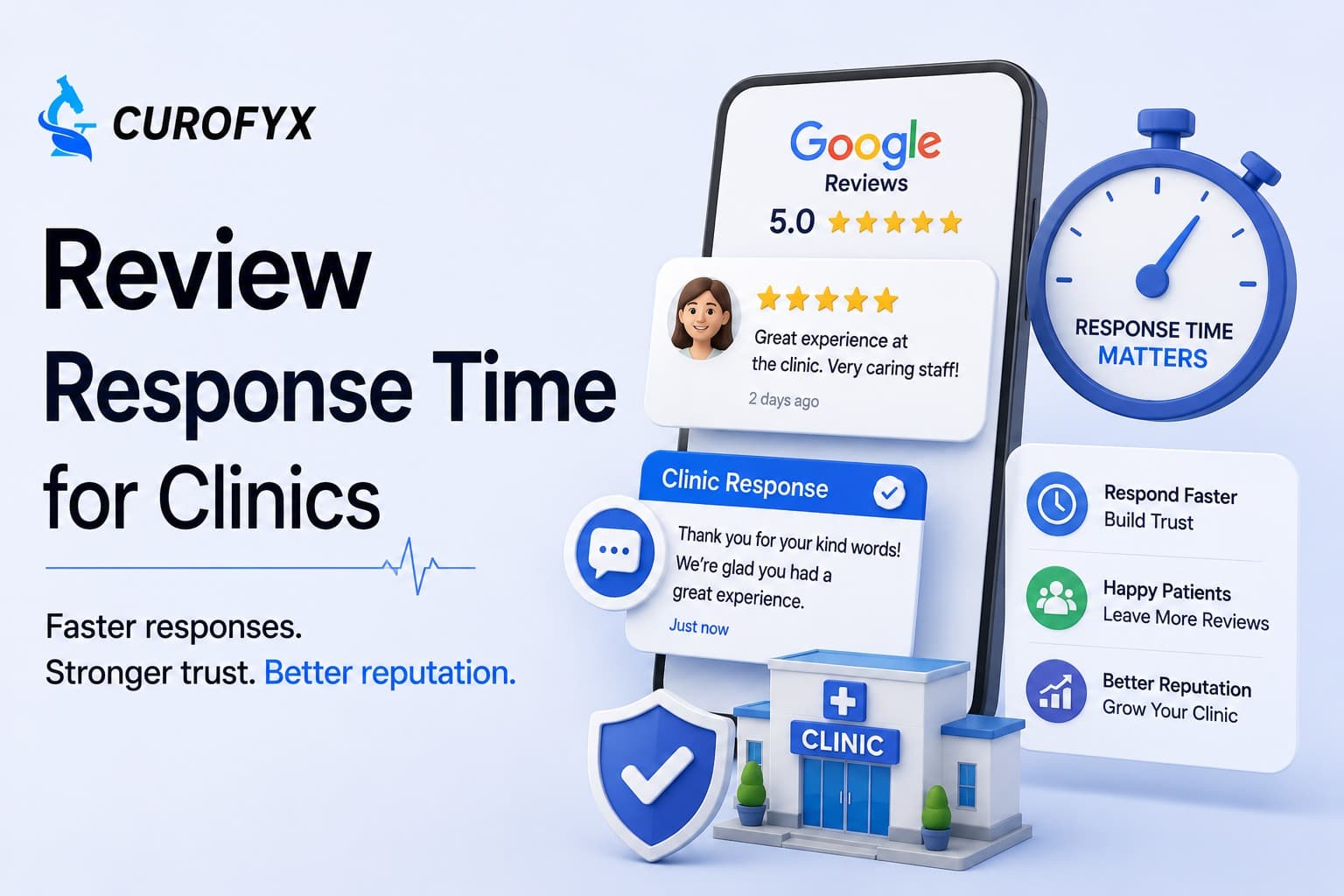
Imagine two private clinics. Both have a 4.7-star Google rating. Both offer similar services, prices and locations. The difference is that one clinic replies to reviews within a day, while the other hasn't responded to a single patient in six months. Which one feels more trustworthy?
For most people, the answer is obvious. Patients don't only judge what previous visitors say. They also judge how the clinic behaves after receiving feedback. Every response, or lack of one, becomes part of your public reputation. Healthcare is different from hospitality or retail. Patients are choosing someone they trust with their health, privacy and wellbeing. Small signals matter. A prompt, thoughtful response suggests an organised practice that listens. Silence can suggest the opposite, even if the clinical care is excellent. Many practice managers still treat review responses as an optional marketing task that gets completed "when there's time." That's a mistake. Response speed has become an operational metric that influences patient confidence, supports reputation management and even provides evidence of an engaged, well-led organisation.
There isn't a formal NHS or CQC rule saying clinics must reply within a specific timeframe. However, customer experience research across healthcare and other service industries consistently points toward the same conclusion: the faster organisations acknowledge feedback, the better the outcome. Patients generally expect businesses to acknowledge online reviews within one to three days. Waiting more than a week often makes organisations appear disengaged, especially when competitors are replying much faster.
Negative reviews deserve even quicker attention. Research into online reputation management consistently shows that early acknowledgement reduces escalation because reviewers feel heard before frustration grows. A prompt response won't always change a patient's opinion, but it often changes how prospective patients interpret the situation.
A practical benchmark for UK clinics looks like this:
| Review Type | Recommended Response Time |
|---|---|
| Negative review | Within 24 hours |
| Neutral review | Within 48 hours |
| Positive review | Within 2-3 days |
| Serious safeguarding concern | Immediate internal escalation |
Notice that these are targets, not legal requirements.
The important point is consistency. Replying within two days every week creates a much stronger impression than responding to thirty reviews in one afternoon after ignoring them for a month. Another common misconception is that positive reviews don't require replies. They do. Thanking patients publicly demonstrates appreciation and encourages future reviewers to leave feedback. It also signals to prospective patients that your clinic values communication, not only damage control.
Clinics sometimes delay responses because they want to investigate every complaint first. That sounds sensible. In reality, it often creates another problem. Patients rarely expect an immediate solution. They expect acknowledgement. A simple response saying the clinic has received the feedback, takes concerns seriously and will investigate privately is usually enough to demonstrate professionalism while the internal review continues. Waiting until every detail has been confirmed can leave the public impression that nobody is paying attention. That's avoidable. A short acknowledgement today is usually better than a perfect response two weeks later.
Most people never write reviews. Most people read them. That distinction matters because the audience for your replies is rarely the person who originally left the review. It's the hundreds of potential patients comparing clinics over the following weeks and months. Eye-tracking and consumer behaviour studies consistently show that people read review responses, particularly on negative reviews. A thoughtful reply can soften the impact of criticism because readers see that the business is accountable. No reply leaves them to assume the complaint is accurate and unresolved. Healthcare decisions involve more perceived risk than choosing a restaurant or hotel.
A patient looking for a new dentist, GP, physiotherapist or aesthetic clinic is asking questions like:
Your responses answer those questions long before the first appointment. Consider two dermatology clinics. Both receive a complaint about appointment delays. Clinic A never replies. Three weeks later the complaint is still sitting unanswered at the top of the Google profile. Clinic B responds within six hours. The clinic apologises for the delay, explains that unexpected clinical cases occasionally affect appointment times and invites the patient to contact the practice manager directly so the issue can be investigated. Neither clinic has removed the complaint. But only one has demonstrated professionalism. That's exactly what prospective patients notice.
Many managers avoid responding because they're worried about saying the wrong thing. Ironically, saying nothing usually causes more damage. People naturally fill information gaps with assumptions. An unanswered complaint may lead prospective patients to believe the clinic ignores feedback, lacks sufficient staff or simply doesn't value patient experience. None of those assumptions may be true. Yet that's the impression silence creates. Healthcare providers should also remember that reviews remain visible for years. An unanswered complaint from eighteen months ago can still influence someone booking an appointment tomorrow. A reply added within twenty-four hours demonstrates ongoing engagement long after the original issue has passed.
Although CQC does not assess providers on response speed alone, consistent review engagement contributes to the broader picture of good governance. Inspectors increasingly expect organisations to demonstrate that patient feedback is monitored, reviewed and acted upon. When leadership can show that reviews are acknowledged promptly, concerns are escalated internally and recurring themes are analysed, it strengthens evidence for effective governance under the Well-led quality statement. The response itself isn't the evidence. The process behind the response is.
Most clinics don't ignore reviews deliberately. They simply don't have someone whose job description includes checking Google, Trustpilot and healthcare review sites every morning. Reception teams are answering phones. Practice managers are handling staffing issues. Clinical teams are focused on patients. Review responses inevitably slide down the priority list.
That's where AI-assisted drafting has become genuinely useful. Notice the wording. AI should draft responses. It should never publish them automatically. Healthcare reviews often involve confidential information, clinical complaints or safeguarding concerns. Every reply still requires human review before publication to ensure confidentiality is protected and the tone reflects the clinic's standards. Used properly, AI removes the slowest part of the workflow. Instead of spending ten minutes writing every reply from scratch, staff receive a professionally written draft within seconds.
They review it, make any necessary changes and publish it. The time saving becomes significant across dozens or hundreds of monthly reviews. For organisations managing several locations, this consistency is just as valuable as speed. Patients should receive the same professional tone whether they're reviewing a London practice or a clinic in Manchester.
Using a platform such as Curofyx's AI Review Replies feature helps teams create personalised, policy-aware draft responses while ensuring every message is checked by a member of staff before it goes live. That balance between automation and human oversight is particularly important in healthcare, where privacy and accuracy matter more than speed alone.
Most clinics have service standards for answering phones, responding to emails or handling complaints. Very few have one for online reviews. That's surprising because review responses are now part of the patient journey. An internal Service Level Agreement (SLA) removes uncertainty. Staff know who owns review management, how quickly replies should be published and which comments need immediate escalation. Instead of hoping someone notices a new Google review, the process becomes measurable.
For example, a GP surgery might decide that all positive reviews are acknowledged within 48 hours by the reception team, while any review mentioning patient safety, discrimination or clinical concerns is immediately escalated to the practice manager. A multi-site hospital group may have local managers draft responses while a central communications team reviews replies involving complaints or reputational risk.
Many healthcare organisations already measure patient satisfaction, Friends and Family Test scores and complaint volumes. Review response time deserves a place alongside them.
Useful metrics include:
| KPI | Recommended Target |
|---|---|
| Average first response time | Under 24 hours |
| Positive reviews answered | Above 90% |
| Negative reviews answered | 100% |
| Reviews requiring escalation | Identified within 2 hours |
| Average review rating | Tracked monthly alongside response speed |
Tracking these figures each month makes it easy to spot bottlenecks. If response times suddenly increase from one day to six days, leadership can investigate before patient confidence is affected. For organisations with multiple branches, comparing response times across locations also helps identify where additional training or resources are needed. Using a central dashboard, such as Curofyx's Reputation Score Analytics and Multi-Platform Monitoring, allows managers to monitor response speed, review trends and performance across every location from one place instead of logging into multiple review platforms individually.
A good benchmark is within 24 hours for negative reviews and within two to three days for positive reviews. Consistency is more important than occasional bursts of activity.
Yes. Responding to both positive and negative reviews shows patients that feedback is valued. It also improves the public perception of your clinic and encourages more patients to leave reviews.
AI should assist with drafting responses rather than publishing them automatically. Every healthcare review should be reviewed by a member of staff to ensure confidentiality, accuracy and an appropriate tone.
Prompt replies reassure prospective patients that the clinic listens to feedback and resolves concerns. They also demonstrate organised governance and support a stronger online reputation.
Any review referring to safeguarding, serious clinical concerns or potential harm should be escalated immediately through the clinic's internal governance process before a public response is finalised.
A central reputation management platform allows healthcare organisations to monitor Google, Trustpilot and healthcare-specific review sites, assign reviews to local teams, measure response times and maintain consistent reply quality across every branch.
Patients notice far more than your average star rating. They notice whether anyone from your clinic shows up after the review is written. A prompt, professional response tells prospective patients that feedback is valued, concerns are taken seriously and the organisation communicates well. Waiting weeks to reply sends the opposite message, regardless of how good the clinical care may be.
The best-performing healthcare providers don't rely on memory or spare time. They establish clear response targets, measure them every month and use technology to remove unnecessary delays while keeping people in control of every published reply. If your team is struggling to keep pace with reviews across Google, Trustpilot and healthcare review platforms, Curofyx helps healthcare providers respond faster with AI-assisted drafting, monitor every location from one dashboard and track response performance through detailed reputation analytics.
Get a live 1-on-1 walkthrough tailored to your clinic’s workflow and see how easily you can automate review requests, monitor your reputation, and reply with AI.