
Healthcare Reputation Specialists
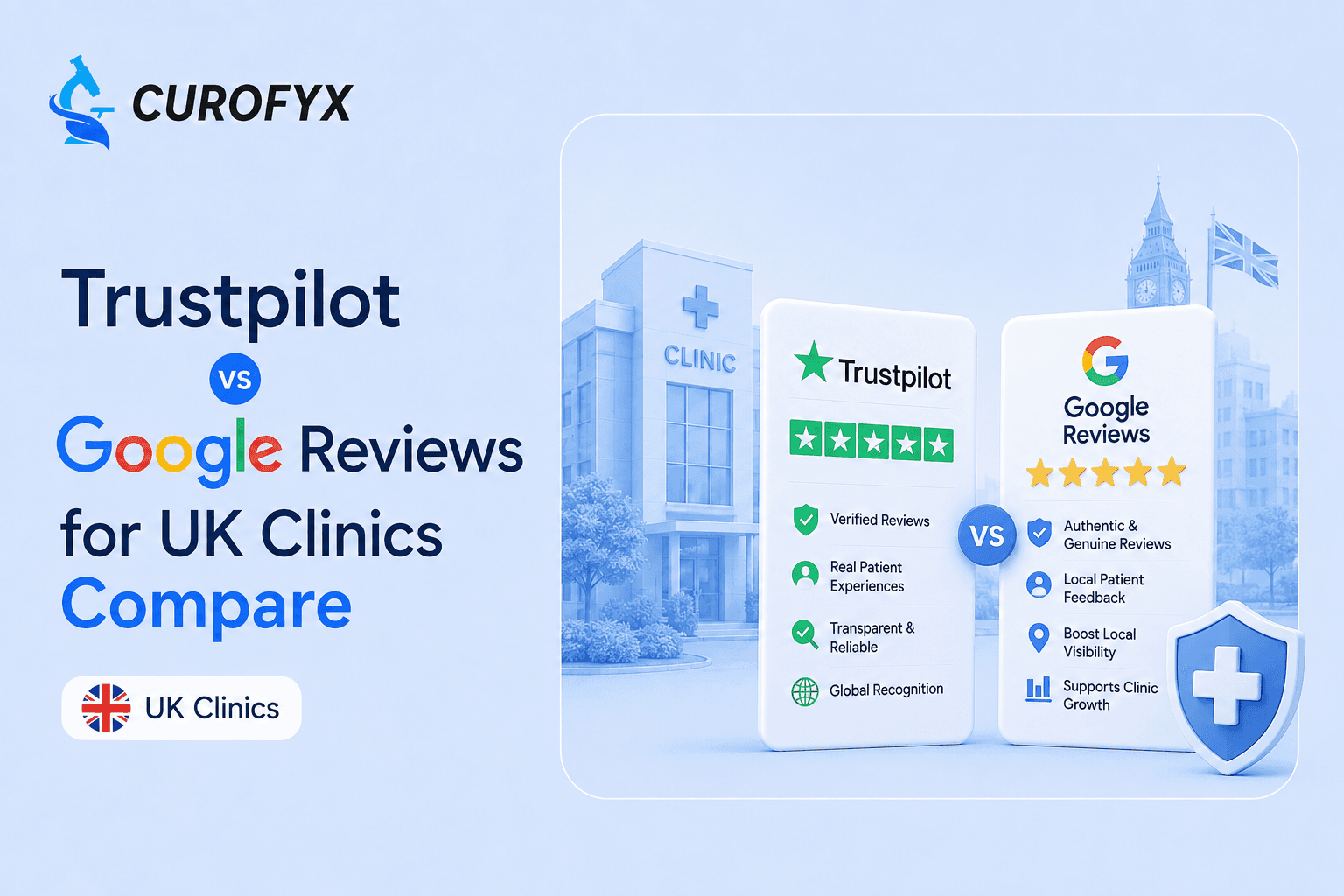
UK clinics often waste time collecting reviews on platforms patients rarely check. This comparison looks at Google Reviews vs Trustpilot for healthcare providers, covering SEO impact, patient trust, platform behaviour, and which review strategy works best for private clinics, dentists, GP surgeries, and specialist practices.
A clinic can have 300 excellent reviews and still lose patients to a competitor with fewer reviews. The reason is simple: reviews only create value when they appear where patients are already making decisions. For most UK healthcare searches, that first interaction happens on Google.
A patient searching "private dermatologist near me", "best dentist in Manchester", or "GP surgery open today" is usually not starting with Trustpilot. They are opening Google, scanning local results, looking at star ratings, reading recent comments and deciding which practice feels trustworthy enough to contact. That does not make Trustpilot irrelevant. Trustpilot has a role, especially for larger healthcare brands, subscription-based health services and organisations where patients compare an overall company experience rather than a single local clinic.
But many clinics make the mistake of treating every review platform as equally valuable. They are not. A dental practice with 500 Trustpilot reviews and only 20 Google Reviews may still struggle to win local searches. A private clinic with strong Google visibility and consistent patient feedback often gets enquiries before a potential patient ever visits another review site.
Google Reviews and Trustpilot serve different purposes. Google Reviews directly connect with local search behaviour because they are built into Google's ecosystem. They appear alongside Google Business Profiles, Maps listings and local search results. For healthcare businesses, this matters.
A patient searching for a clinic in their area is usually comparing options within seconds. They see:
All before visiting the website.
A strong Google Business Profile with regular positive reviews can improve local visibility because Google uses multiple signals to determine which businesses appear prominently in local results. Reviews are one part of that wider system.
Trustpilot works differently. Trustpilot reviews are usually discovered when someone already knows the company's name or is researching reputation more broadly. They are useful for answering questions like: "Is this healthcare company reliable?" , "Are existing customers satisfied?" , "Does this provider have a history of poor service?"
The SEO difference is where many healthcare businesses get confused. A Google Review can support discovery. A Trustpilot review usually supports validation. Those are two different stages of the patient journey. For a local GP surgery, dental practice or aesthetic clinic, discovery usually happens first. That makes Google the priority. For a national healthcare brand operating across multiple services, Trustpilot can become more valuable because reputation extends beyond one location.
Google has become the first place many patients check before contacting a clinic. Research from BrightLocal's Local Consumer Review Survey has consistently shown that consumers use Google as one of the primary sources for local business reviews. While the exact percentage changes each year, Google remains the dominant review platform for local discovery.
Healthcare follows the same pattern. A patient looking for a physiotherapist in Leeds is unlikely to search: "Leeds physiotherapist Trustpilot reviews" They are more likely to search: "physiotherapist Leeds" Then compare the clinics appearing in Google Maps. That moment is where Google Reviews influence behaviour.
A clinic with 4.8 stars from 200 reviews immediately creates a different impression from a competitor with 4.2 stars and 25 reviews. Patients also look at review freshness. A clinic collecting regular reviews every week appears active and trusted. A clinic with excellent reviews from three years ago may raise questions, even if the overall rating is higher. This is why review volume and consistency matter.
A practice manager once told me their clinic had "hundreds of happy patients" but struggled to attract new enquiries. The problem was not patient satisfaction. The problem was that those happy patients were invisible online. They had no repeatable process for collecting feedback.
Google Reviews answer the question most patients are asking: "Can I trust this clinic near me?"
The location connection matters. A patient reading a review from someone who visited the same branch, saw the same doctor or received the same treatment feels more relevant than a general company rating.
This is especially important for:
Patients want proof from people who had a similar experience. A review saying: "Dr Smith explained my treatment options clearly during my consultation at the Birmingham clinic" creates much stronger reassurance than a generic company review saying: "Great service." Specificity builds trust.
Trustpilot is often associated with company-level reputation. Patients may check it when considering:
A strong Trustpilot presence can help reduce uncertainty, especially when a patient is unfamiliar with the brand.
However, local clinics sometimes invest heavily in Trustpilot because it looks impressive internally. That is where strategy goes wrong.
A private clinic in London does not usually need hundreds of Trustpilot reviews before improving its Google profile. The patient searching "private fertility clinic London" is probably not making that comparison. They are looking at Google Maps. The platform should match the buying decision.
| Factor | Google Reviews | Trustpilot |
|---|---|---|
| Main purpose | Local discovery and reputation | Brand reputation and comparison |
| Appears in search results | Yes, through Google Business Profile | Usually through Trustpilot pages |
| Best for | Local clinics and practices | Healthcare brands and national providers |
| Patient mindset | "Should I contact this clinic?" | "Can I trust this company?" |
| Location relevance | Very high | Low to moderate |
| SEO value for local clinics | Stronger | Limited |
| Review visibility | High during local searches | Higher during brand searches |
The right review platform depends heavily on the type of healthcare organisation. A mistake many healthcare marketers make is copying the strategy of large healthcare brands and applying it to a single-location clinic.
A five-location private healthcare group and an independent dental practice do not compete in the same way. Their patients search differently, compare differently and trust different signals. The platform priority should follow patient behaviour.
For GP surgeries, Google Reviews are usually the stronger priority.
Patients searching for a GP are rarely researching a national brand. They are looking for accessibility, location, availability and confidence that other local patients have had a good experience.
A patient might search: "GP surgery near me" , "Private GP London" , "NHS GP accepting patients Birmingham" . The first impression usually comes from Google. For GP practices, review management is less about collecting thousands of ratings and more about maintaining a visible, trustworthy profile. A surgery with 60 recent reviews and thoughtful responses can often create more confidence than one with 300 reviews collected several years ago.
The challenge for GP practices is that healthcare experiences are personal and complex. Patients may leave reviews about waiting times, reception interactions, communication quality and appointment availability rather than clinical outcomes alone. That means responding professionally matters. A defensive reply to a frustrated patient can damage trust faster than the original review.
For practices focused on improving their online presence, dedicated systems for monitoring patient feedback across platforms can help teams respond consistently rather than checking reviews manually every few days. A solution like Curofyx Multi-Platform Monitoring is designed around this type of workflow.
Dental practices are one of the clearest examples where Google Reviews usually outperform Trustpilot. Dental decisions are highly local. A patient looking for Invisalign, implants or cosmetic dentistry is often comparing several clinics within a short distance.
They want evidence that:
Google Reviews appear exactly where this comparison happens.
A dental practice with strong Google visibility can capture patients before they ever search for the brand name. Trustpilot can still help larger dental groups, especially those operating nationally. But for independent practices and smaller groups, prioritising Google usually produces a better return. A clinic owner spending hours encouraging Trustpilot reviews while their Google Business Profile has unanswered reviews is focusing on the wrong problem.
For dental practices building a stronger review strategy, patient feedback workflows should connect naturally with the patient journey. More information on review management for dental teams can be found through Curofyx Dental Practice Solutions.
Private clinics are where the decision becomes more complicated. A private dermatology clinic, fertility clinic or specialist medical centre often needs both local visibility and broader reputation.
Google Reviews help patients discover the clinic. Trustpilot can help reassure patients researching the brand. For example, a patient considering a private cosmetic procedure may search Google first, visit the clinic website, compare consultants and then look for independent reputation signals before booking.
In this situation, Google creates the initial opportunity. Trustpilot supports the final confidence check. Private clinics should not treat these platforms as competitors. They serve different moments in the patient journey.
The mistake is putting equal effort into both from day one. A clinic with limited resources should first build a strong Google foundation, then expand to additional platforms once review collection becomes consistent.
Aesthetic clinics rely heavily on local search behaviour. Patients are often comparing:
Google Reviews are particularly valuable because they appear alongside images, maps and business information. A patient searching "Botox clinic Manchester" may compare several providers within minutes.
The clinic with more recent, detailed reviews often feels safer. Trustpilot can support larger aesthetic brands, especially those with multiple locations or national marketing campaigns. But for individual clinics, Google usually deserves the majority of attention.
Many aesthetic clinics also underestimate the importance of review responses. A professional response demonstrates that the clinic listens to patients and manages feedback openly. This can influence prospective patients reading reviews months later.
| Healthcare Business | Primary Platform | Secondary Platform | Reason |
|---|---|---|---|
| GP Surgery | Google Reviews | NHS profiles and specialist platforms | Patients mainly search locally |
| Dental Practice | Google Reviews | Trustpilot for larger groups | Local reputation drives bookings |
| Private Clinic | Google Reviews | Trustpilot | Discovery and brand validation both matter |
| Dermatology Clinic | Google Reviews | Trustpilot | Treatment decisions are highly reputation-led |
| Aesthetic Clinic | Google Reviews | Trustpilot | Patients compare local providers visually |
| Hospital Group | Google Reviews | Trustpilot and healthcare review platforms | Brand reputation matters across locations |
| Healthcare Technology Company | Trustpilot | Google Reviews | Customers evaluate company reliability |
There is a common belief that successful reputation management means collecting reviews everywhere. That sounds logical. It usually creates a mess.
A clinic with five different review platforms often struggles because nobody owns the process. Reviews sit unanswered. Staff forget login details. New patients receive inconsistent experiences depending on where they find the practice.
More platforms do not automatically create more trust. Better management does. A focused strategy where your strongest platform receives consistent attention will usually outperform a scattered approach.
For most UK clinics, that means: Start with Google. Build a reliable review collection process. Respond properly. Then expand when there is a clear reason. The goal is not to have the biggest number of reviews across the internet. The goal is to influence the patient at the exact moment they are deciding who to trust.
A review strategy should not start with the platform that looks most impressive. It should start with the platform that influences patient decisions. For most UK healthcare providers, that means building a strong Google Reviews foundation before investing heavily in other platforms. A practical priority order looks like this:
Google should usually be the first priority for clinics because it connects directly with local search.
A patient who has never heard of your clinic is likely to discover you through Google. They are comparing options before they have any relationship with your brand. That first impression happens quickly.
A clinic appearing in local search with hundreds of recent reviews creates immediate confidence. A clinic with very few reviews, even if it has excellent clinical outcomes, has less social proof available at the point where the patient is deciding. This matters even more for competitive locations.
A private clinic in London, Manchester or Birmingham may be competing against dozens of similar providers. The difference between being selected and ignored can come down to small signals such as review volume, response quality and rating consistency.
Google Reviews should be treated as an ongoing reputation asset, not a one-time campaign. A common mistake is running a review push once a year. For example, a clinic may collect 100 reviews after opening, then stop asking. Six months later, competitors have built a stronger stream of recent feedback. Patients notice activity. Google notices activity too.
Healthcare review platforms can be valuable, but they work best when they match the patient journey.
Platforms focused specifically on healthcare can provide additional credibility because patients understand they are looking at healthcare-related experiences rather than general business reviews.
This is particularly useful for:
However, these platforms should complement Google, not replace it. A consultant may have excellent reviews on a specialist healthcare platform, but if their Google presence is weak, many local patients will never discover them. The strongest healthcare brands usually have both: A strong discovery channel. A strong validation channel. Those are different jobs.
Trustpilot becomes more valuable when patients are evaluating the organisation itself rather than a local branch.
This often applies to:
A patient choosing an online healthcare provider may care less about one specific location and more about whether the company is reliable. Trustpilot can help answer that concern. For local clinics, though, it is rarely the first place patients look.
That is why a small practice should be careful before copying the reputation strategy of a national healthcare company. Different businesses need different systems.
Many clinics measure reviews by asking one question: "How many reviews did we get this month?"
That number matters, but it does not tell the full story. A better reputation dashboard looks at:
Are reviews increasing consistently? A clinic collecting 15 reviews every month is building stronger long-term visibility than one collecting 100 reviews during a single campaign and then going quiet.
How recent are patient experiences? A profile filled with reviews from years ago may not create the same confidence as one receiving regular feedback.
Are patients receiving professional responses? A review without a response is a missed opportunity to demonstrate patient care.
Where are reviews actually influencing enquiries? A clinic should track whether Google, Trustpilot or healthcare platforms are contributing to patient acquisition. This is where reputation analytics become useful. A tool like Curofyx Reputation Score Analytics helps healthcare teams understand performance beyond simply counting stars.
For most local UK clinics, yes. Google Reviews usually have a stronger impact because patients discover healthcare providers through local search and Google Maps.
Usually not as a first priority. Dental practices generally benefit more from improving their Google Reviews because patients commonly compare nearby dentists through Google search.
Trustpilot can support brand visibility, especially for companies with national recognition. However, Google Reviews usually have a stronger connection with local healthcare search performance.
There is no fixed number, but consistent growth matters more than hitting a specific target. A clinic with regular recent reviews often appears more trustworthy than one with many outdated reviews.
Yes, but they should also consider healthcare-specific patient feedback channels where relevant. Google remains important because many patients still search locally before choosing or contacting a service.
Yes. Many healthcare organisations use reputation management software to monitor multiple platforms, respond faster and maintain consistent processes across locations.
For most UK clinics, the answer is clear: Google Reviews should come first. Trustpilot has value, especially for healthcare brands with a national audience, but it rarely replaces the visibility and trust created by a strong Google presence.
The smartest approach is not collecting reviews everywhere. It is building a system around the platforms your patients actually use. Start with Google, measure what drives enquiries, then expand when there is a genuine business reason.
Get a live 1-on-1 walkthrough tailored to your clinic’s workflow and see how easily you can automate review requests, monitor your reputation, and reply with AI.