
Healthcare Reputation Specialists
Google isn't the only place patients judge your clinic. Depending on your specialty and country, platforms like Doctify, NHS.uk or Healthgrades may carry just as much weight. This guide explains where reviews matter most, how to claim every profile quickly, and how to monitor them without creating another full-time job.
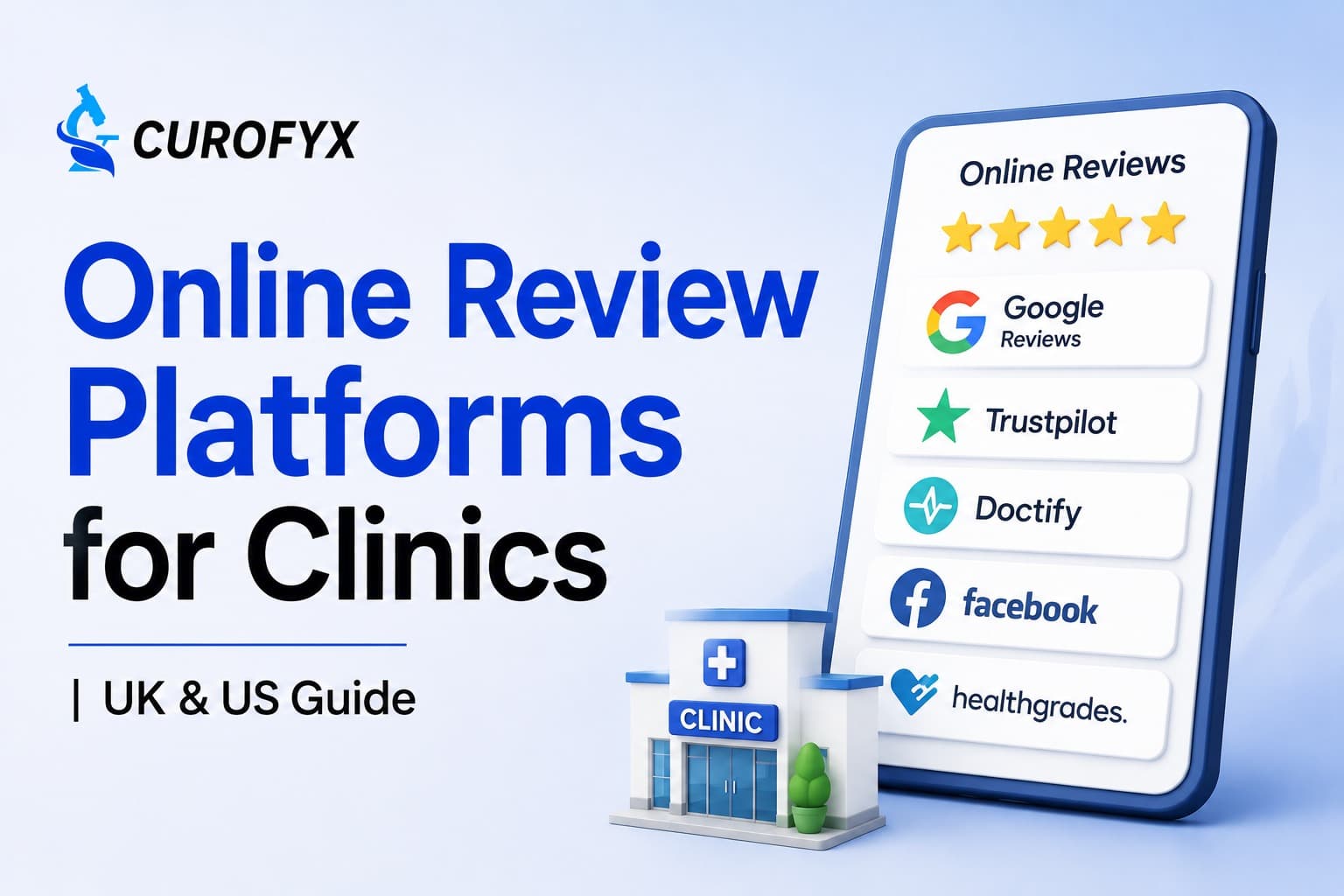
A private dermatology clinic in London and an urgent care centre in Texas don't have the same online reputation problem. Yet many healthcare providers treat review management as if every patient behaves identically. They don't. Some patients head straight to Google. Others search NHS.uk before registering with a GP. A patient looking for a consultant in Manchester might compare Doctify profiles, while someone searching for a family physician in Chicago is far more likely to read Healthgrades or Vitals.
The mistake isn't ignoring reviews. The mistake is assuming every review platform deserves the same attention. Your goal isn't to be everywhere. It's to be visible where your patients are already looking.
If you ask a practice manager where patients leave reviews, the first answer is almost always Google. That's correct. It's also incomplete.
Patients rarely stop after reading one source. They'll often compare information across several platforms before booking an appointment, particularly for private healthcare where they're making a direct financial decision. Imagine somebody searching for a cosmetic dermatologist.
They might:
Each platform answers a different question. Google tells them you're nearby. Doctify highlights clinical reputation. Trustpilot reflects customer service. Your own website explains treatments. Missing one profile isn't usually disastrous. Missing three creates doubt. A complete reputation feels safer than a fragmented one.
One common misconception deserves challenging. Some clinics obsess over maintaining five-star ratings everywhere.
That's unrealistic. Patients actually expect a handful of balanced reviews. What damages credibility is inconsistency. If Google lists 220 reviews while another major healthcare platform shows an empty profile, prospective patients start wondering whether the practice is actively managing its reputation. That hesitation costs enquiries long before anyone contacts reception.
Google remains the starting point for most local healthcare searches in both the UK and the United States.
Patients discover Google reviews through:
Google also influences local SEO. Practices with complete profiles, fresh reviews and active engagement generally stand a better chance of appearing prominently in local search results, although Google considers many ranking factors beyond reviews alone. For almost every healthcare business, Google deserves the highest priority.
learn more on: Google Business Profile
Trustpilot wasn't built specifically for healthcare. That doesn't mean it lacks value. Private clinics, cosmetic practices, diagnostic centres and subscription healthcare providers often build strong Trustpilot profiles because patients think of them as consumer businesses as much as healthcare providers.
Trustpilot reviews also frequently appear in branded Google searches. If someone searches your clinic name directly, those ratings can become part of their decision-making process. Practices comparing platforms may also find this useful: Curofyx vs Trustpilot.
For many UK private consultants and specialist clinics, Doctify has become one of the most influential healthcare review platforms.
Patients searching for consultants often value verified healthcare reviews more than general business reviews.
That's especially true for:
Doctify profiles provide far more clinical context than Google alone.
Healthgrades plays a similar role across much of the United States.
Patients researching physicians frequently compare:
Healthcare organisations operating in the US should view Healthgrades as a core reputation platform rather than an optional directory.
For NHS providers, NHS.uk remains an important source of public patient feedback.
Patients can leave comments about:
Unlike commercial review sites, NHS.uk exists within the wider NHS information ecosystem. Many patients checking opening hours, services or registration details will naturally encounter patient feedback at the same time. That makes responding professionally particularly important.
| Platform | Best For | UK | US |
|---|---|---|---|
| Every clinic | ⭐⭐⭐⭐⭐ | ⭐⭐⭐⭐⭐ | |
| Trustpilot | Private healthcare | ⭐⭐⭐⭐ | ⭐⭐⭐ |
| Doctify | UK specialists | ⭐⭐⭐⭐⭐ | Limited |
| Healthgrades | US physicians | Limited | ⭐⭐⭐⭐⭐ |
| NHS.uk | NHS providers | ⭐⭐⭐⭐⭐ | Not applicable |
Yes. Google Business Profile is the most important review platform for almost every healthcare provider because it influences local search visibility, Google Maps results, and patient decision-making. Even specialist clinics that receive referrals should keep their profile accurate and actively managed.
Usually not. Google remains the first place most patients check before contacting a clinic. Trustpilot becomes more valuable for larger healthcare brands, online healthcare services, and organisations investing heavily in brand reputation beyond local search.
Yes. NHS services can receive patient feedback through the NHS website, and many prospective patients read those comments alongside Google reviews before choosing a practice.
Google remains the starting point for most patients, but Healthgrades is particularly influential for physicians, specialists, and hospital systems because patients often compare providers there before booking appointments.
Yes, provided requests comply with local regulations and platform policies. In the UK, clinics should avoid revealing confidential patient information, avoid incentives that could influence reviews, and ensure communications comply with UK GDPR and the Data Protection Act 2018.
The simplest approach is to use a reputation management platform that collects reviews from Google, Trustpilot, Doctify, Healthgrades, NHS profiles, and other sites into one dashboard. That eliminates the need to check each platform individually several times a day.
Claiming your clinic's review profiles isn't a marketing exercise. It's basic housekeeping that directly affects how patients find you and whether they trust you enough to book. Too many practices spend thousands on websites and advertising while leaving unclaimed Google listings, outdated NHS information, or unattended Trustpilot reviews sitting in public view. That's an easy problem to fix, and one that pays off every single day.
Set aside one afternoon to claim every profile that matters, standardise your clinic information, and decide who owns review management going forward. After that, the focus shifts from chasing platforms to consistently collecting feedback and responding quickly. If managing reviews across Google, Trustpilot, Doctify, NHS profiles, and other healthcare platforms starts becoming a daily administrative burden, a centralised reputation management solution like Curofyx can bring everything into one dashboard. You'll spend less time logging into multiple websites and more time acting on patient feedback that genuinely improves your clinic's reputation.
Get a live 1-on-1 walkthrough tailored to your clinic’s workflow and see how easily you can automate review requests, monitor your reputation, and reply with AI.