GSTIN: 122287344983902H
GSTIN: 122287344983902H



Iron Profile is a group of blood tests that evaluate the levels of iron in the body and its ability to store and transport iron. These tests typically include Serum Iron, Total Iron-Binding Capacity (TIBC), Ferritin, and Transferrin Saturation. Serum Iron measures the amount of iron in the blood, TIBC reflects the blood's capacity to bind iron, Ferritin indicates stored iron levels, and Transferrin Saturation represents the percentage of transferrin (a protein that transports iron) that is saturated with iron. Iron studies are crucial for diagnosing and managing conditions like iron deficiency anemia, hemochromatosis, and other iron metabolism disorders.
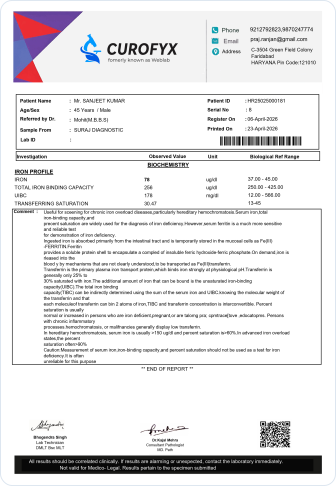
Iron
Total Iron Binding Capacity (TIBC)
UIBC
Transferrin Saturation
An Iron Profile is a group of blood tests used to evaluate the amount of iron in the body and how it is stored and transported. It typically includes parameters such as serum iron, ferritin, total iron binding capacity (TIBC), and transferrin saturation.
This test helps diagnose conditions like iron deficiency anemia or iron overload disorders and is also used to monitor treatment and overall iron balance in the body.
Here’s what an ideal Iron Profile report format should include:
All Iron Profile parameters should be presented in a well-structured tabular format with columns such as Test Name, Result, Unit, and Reference Range. Key parameters include:
Values falling outside the normal range should be clearly highlighted (e.g., bold, color-coded, or flagged as High/Low) to improve readability and quick clinical interpretation.
Each parameter must include appropriate reference ranges. Some values, such as eGFR, may vary based on age, gender, and body factors, so correct contextual ranges are important for accurate assessment.
A brief interpretation section helps both clinicians and patients understand the results. For example:
Modern lab software often auto-generates these interpretations, making reports more patient-friendly and reducing manual effort.

In Curofyx software, this is the inbuilt interpretation for Iron Profile
Plasma iron concentration is determined by absorption from the intestine; storage in the intestine, liver, spleen, bone marrow, rate of breakdown or loss of hemoglobin, and rate of synthesis of new hemoglobin.
| Increased | Decreased |
|---|---|
| Hemosiderosis (eg, multiple transfusions, excess iron administration), acute Fe poisoning (children), hemolytic anemia, pernicious anemia, aplastic or hypoplastic anemia, viral hepatitis, lead poisoning, thalassemia, hemochromatosis. Drugs: estrogens, ethanol, oral contraceptives. | Iron deficiency, nephrotic syndrome, chronic renal failure, many infections, active hematopoiesis, remission of pernicious anemia, hypothyroidism, malignancy (carcinoma), postoperative state, kwashiorkor. |
TIBC correlates with serum transferrin, but the relationship is not linear over a wide range of transferrin values and is disrupted in diseases affecting transferrin-binding capacity or other iron-binding proteins.
Increased in: Iron deficiency anemia, late pregnancy, infancy, acute hepatitis. Drugs: oral contraceptives.
Decreased in: Hypoproteinemic states (eg, nephrotic syndrome, starvation, malnutrition, cancer), hemochromatosis, thalassemia, hyperthyroidism, chronic infections, chronic inflammatory disorders, chronic liver disease, and other chronic diseases.
Increased % transferrin saturation with iron is seen in iron overload (iron poisoning, hemolytic anemia, sideroblastic anemia, thalassemia, hemochromatosis, pyridoxine deficiency, aplastic anemia, RBC transfusions).
Decreased % transferrin saturation with iron is seen in iron deficiency (usually saturation < 16%). It can also be used to assess nutritional status.
Get a live 1-on-1 walkthrough tailored to your lab’s workflow and see how easily you can automate reporting, billing, and daily operations.
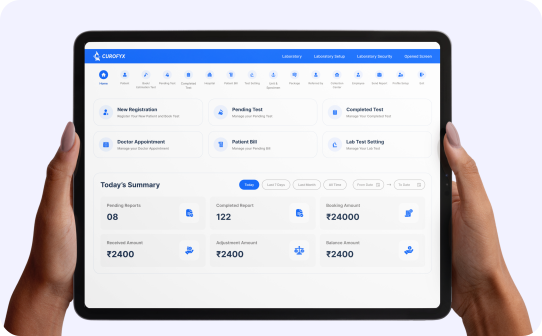
A complete pathology lab system to handle patient records, test workflows, automated reporting, billing, and instant report sharing all in one place.