GSTIN: 122287344983902H
GSTIN: 122287344983902H



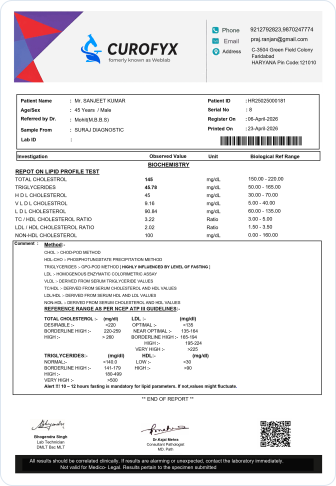
A Lipid Profile is a blood test that measures fats in the blood to assess heart disease risk. It includes Total Cholesterol, LDL (bad cholesterol), HDL (good cholesterol), and Triglycerides. The test helps diagnose lipid disorders, monitor heart health, and guide treatment to reduce cardiovascular risk.
Total Cholesterol
LDL / HDL
Total Cholesterol / HDL
TG / HDL
LDL Cholesterol
Non-HDL cholesterol
VLDL Cholesterol
A Lipid Profile is a blood test that measures different types of fats (lipids) in the blood to evaluate heart health. It typically includes total cholesterol, LDL (bad cholesterol), HDL (good cholesterol), and triglycerides.
This test helps assess the risk of cardiovascular diseases such as heart attack and stroke. It is commonly used for routine health checkups and to monitor the effectiveness of lifestyle changes or medications aimed at controlling cholesterol levels.
Here’s what an ideal Lipid Profile report format should include:
All lipid parameters should be presented in a structured tabular format with columns such as Test Name, Result, Unit, and Reference Range. Key parameters include:
Values outside the reference range should be clearly highlighted or flagged (High/Low) for better readability and quick clinical interpretation.
Each parameter should include clinically accepted reference or desirable ranges (often based on guidelines). These may vary depending on risk category (e.g., general population vs. high cardiovascular risk). Including clearly defined ranges is essential for accurate assessment.
A brief interpretation section helps both clinicians and patients understand the results. Examples include:
Modern lab software can auto-generate these interpretations, improving clarity and consistency while saving time.

In Curofyx software, this is the inbuilt interpretation for Lipid Profile
Abnormalities of lipids are associated with increased risk of coronary artery disease (CAD) in patients with DM. This risk can be reduced by intensive treatment of lipid abnormalities. The usual pattern of lipid abnormalities in type 2 DM is elevated triglycerides, decreased HDL cholesterol and higher proportion of small, dense LDL particles. Cholesterol is a lipid found in all cell membranes and in blood plasma. It is an essential component of the cell membranes, and is necessary for synthesis of steroid hormones, and for the formation of bile acids. Cholesterol is synthesized by the liver and many other organs, and is also ingested in the diet. Triglycerides are lipids in which three long-chain fatty acids are attached to glycerol. They are present in dietary fat and also synthesized by liver and adipose tissue.
Newer treatment goals and statin initiation thresholds based on the risk categories proposed by Lipid Association of India in 2020.
| Risk Category | Treatment Goal | Consider Therapy | ||
|---|---|---|---|---|
| LDL Cholesterol (LDL-C) (mg/dl) | Non-HDL Cholesterol (non-HDL-C) (mg/dl) | LDL Cholesterol (LDL-C) (mg/dl) | Non-HDL Cholesterol (non-HDL-C) (mg/dl) | |
| Extreme Risk Group Category A | <50 (optional ≤30) | <80 (optional ≤60) | ≥50 | ≥80 |
| Extreme Risk Group Category A | <30 | <60 | >30 | >60 |
| Very High | <50 | <80 | ≥50 | ≥80 |
| High | <70 | <100 | ≥70 | ≥100 |
| Moderate | <100 | <130 | ≥100 | ≥130 |
| Low | <100 | <130 | ≥130* | ≥160* |
Get a live 1-on-1 walkthrough tailored to your lab’s workflow and see how easily you can automate reporting, billing, and daily operations.

A complete pathology lab system to handle patient records, test workflows, automated reporting, billing, and instant report sharing all in one place.